
Dharma Teacher Training for the Modern Era
This year, the first cycle of the Milinda program moved into Year 8, which will see the conclusion of the study of sutrayana and the start of the teachings on tantrayana.
The Milinda Program: A KF25 Special Edition on Teacher Training
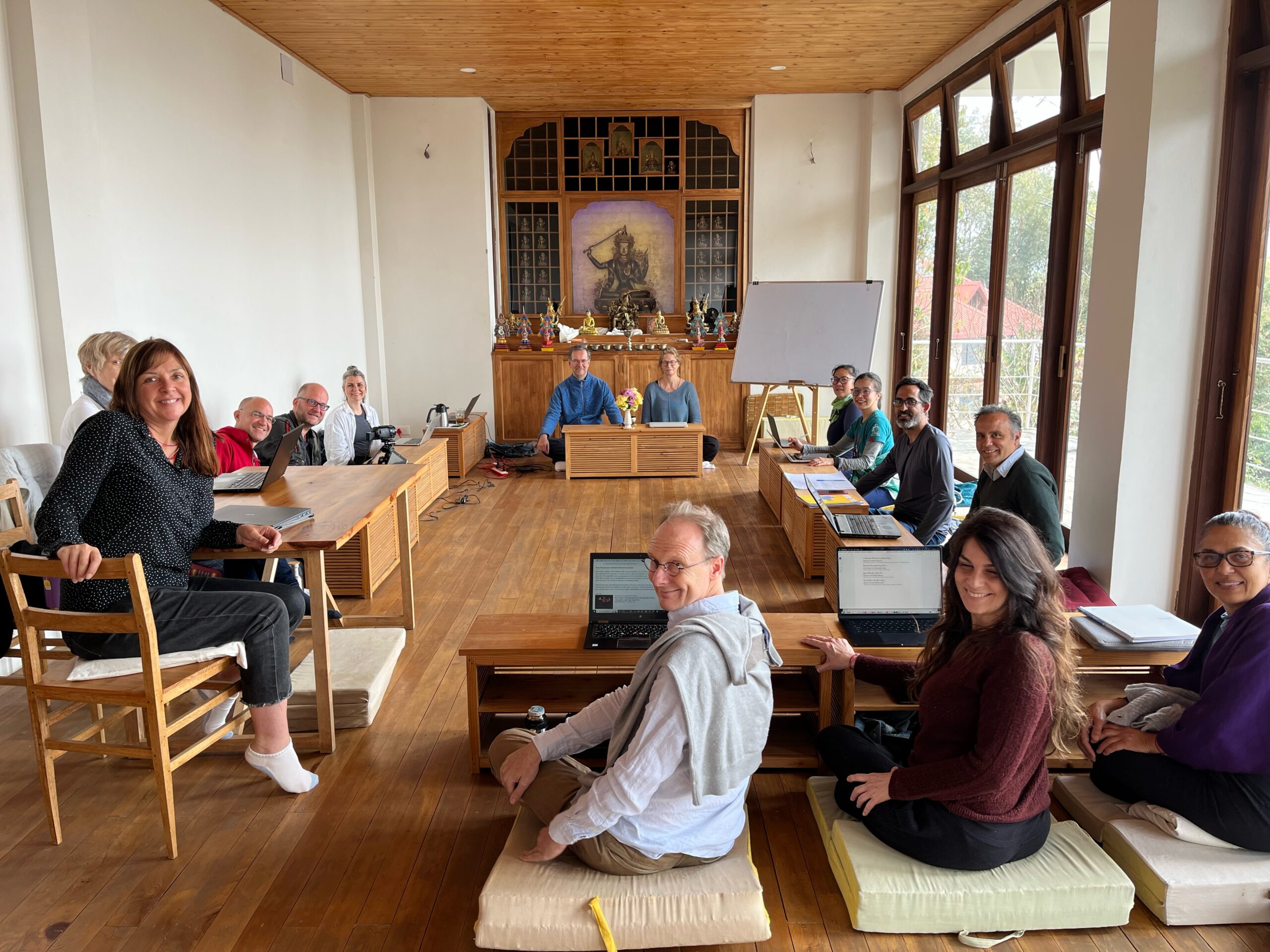
As a participant and committee member of the Milinda Program—inspired by the vision of my teacher, Dzongsar Khyentse Rinpoche—I have been in training to become a modern-day dharma teacher now for almost 10 years.
We take our name from King Milinda, an ancient Greek ruler who famously learned aspects of the Buddhist teachings from the Indian monk Nagasena by asking tough, probing questions. In the spirit of that historic meeting of Eastern wisdom and Western curiosity, our goal is not to simply cite or “copy-and-paste” old scriptures or to become khenpos, but to actively learn how to bridge traditional Buddhist philosophy and modern thought. Figuring out how to translate ancient truths so that they are accessible and relevant to people today has been a wonderful journey indeed.
We’ve been lucky to learn directly from Rinpoche over the years, but he has always made it clear that Milinda shouldn’t rely on him entirely. He wants us to be self-sufficient. To make that happen, he put the participants in charge. I’m on the committee that handles the actual leadership and day-to-day work to keep things running. It’s a big responsibility, but I honestly feel it’s one of the best parts of the program, especially working together with fellow committee members from different sanghas. Rather than just studying the dharma, in a way we are forced to come up with our own ideas on how to transplant the teachings successfully and how to develop the Milinda sangha into a cohesive group—which makes the whole experience much more interesting and rewarding.
“My initial motivation in participating was to study authentic dharma and go to the source of the practices and teachings. I wanted to be able to distinguish between what is rooted in the scriptures and what are newer inventions. Milinda has definitely given me the opportunity to do that.”
— Anja Lang, Siddhartha’s Intent, Denmark
“My initial intention in joining the Milinda Program was simply to be of service to the dharma. In that sense, the program exposed me to the vastness of the Buddhist world and a diverse knowledge base to draw on in order to support others.”
— Harry Einhorn, Chögyam Trungpa lineage, Taiwan
My intention in joining Milinda was to broaden my knowledge, and this has definitely been accomplished. In fact, I’ve learned how much more there is to learn, how vast the Buddha’s teachings are.
Jane Packman, Rigpa, Australia
We’re now in Year 10, the last year of the first Milinda cycle. After wrapping up our study of the Sutrayana paths, we are now on a 2-year journey through the Tantrayana.
From Day One, we’ve taken a nonsectarian, or Rimé, approach. That means we learn from all kinds of teachers: Eastern and Western, monastics and laypeople, from different Tibetan Buddhist lineages. Having Western scholars like Thomas Doctor, Karl Brunnhölzl, and John Dunne teach on the program—along with the capable teachers from Nitartha Institute and Naropa University—has been a huge help in breaking down the most complex concepts. I feel these Western teachers have been especially beneficial in making the teachings approachable.
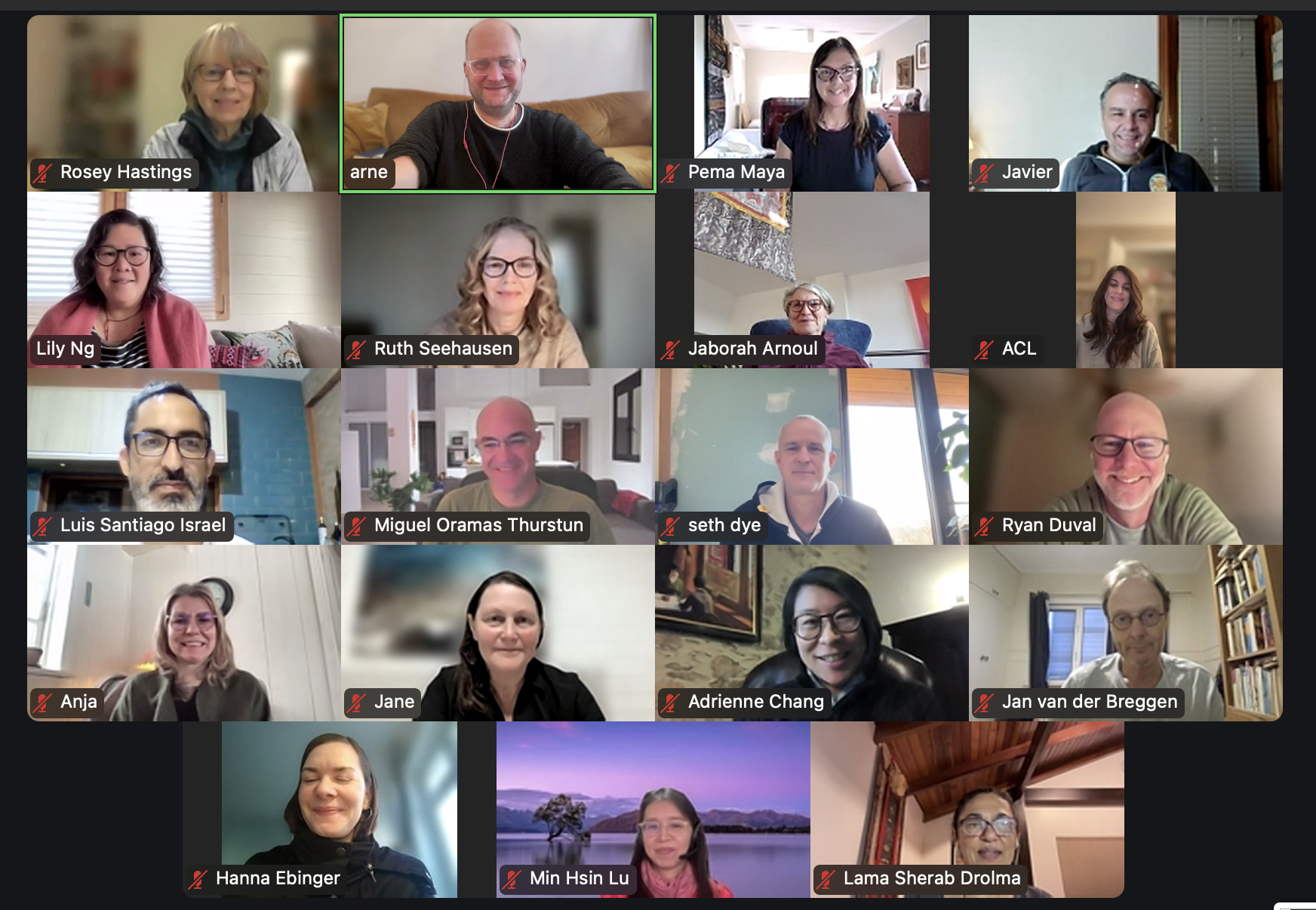
That open-mindedness, which Rinpoche really champions, defines our group, too. We come from all over the world. Some of us follow Dzongsar Khyentse Rinpoche and others are from the Chagdud, Rigpa, and Chögyam Trungpa sanghas. Even though we all have responsibilities in our own sanghas back home, at Milinda, we’re peers. Getting to exchange and discuss ideas across different Buddhist traditions has been eye-opening for all of us and has broadened our horizons. We’ve also done intense but fun 3-month study retreats around the globe, which has really made us a community. It’s been an amazing decade, and none of it would have been possible without Khyentse Foundation, which generously stepped up to fund the whole program.
“I was delighted when I was offered the opportunity to join the Milinda Program. I needed to strengthen my theoretical understanding of the dharma, and Milinda has been perfect for this. I now have a broad understanding of the key topics of study and how they build on each other. I also gained a deep appreciation for the early Indian masters and Tibetan commentators. I think my biggest challenge now is confidence and direction. Although I now have resources and an understanding of the topics, I am not sure how to build on this to bring benefit for the dharma more widely.”
— Pema Maya, Siddhartha’s Intent, Australia
“For me, the most valuable thing has been exposure to the foundational texts that explain the underlying structure of the Buddhadharma. Now, when I’m asked to teach, even though I don’t really have any experience or realization, I can at least clearly distinguish the Buddha’s teachings from my personal interpretation.”
— Harry Einhorn, Chögyam Trungpa lineage, Taiwan
“Milinda has given me the chance to open up to the incredible depth of the Buddha’s teachings. Our khenpos and other teachers have been so generous with their knowledge and time, and I have also very much enjoyed meeting and studying with people from different sanghas and cultural backgrounds. The main challenge for me is trying to understand the teachings and put them into practice. My wish is to gain more experience as time goes on.”
— Jane Packman, Rigpa, Australia
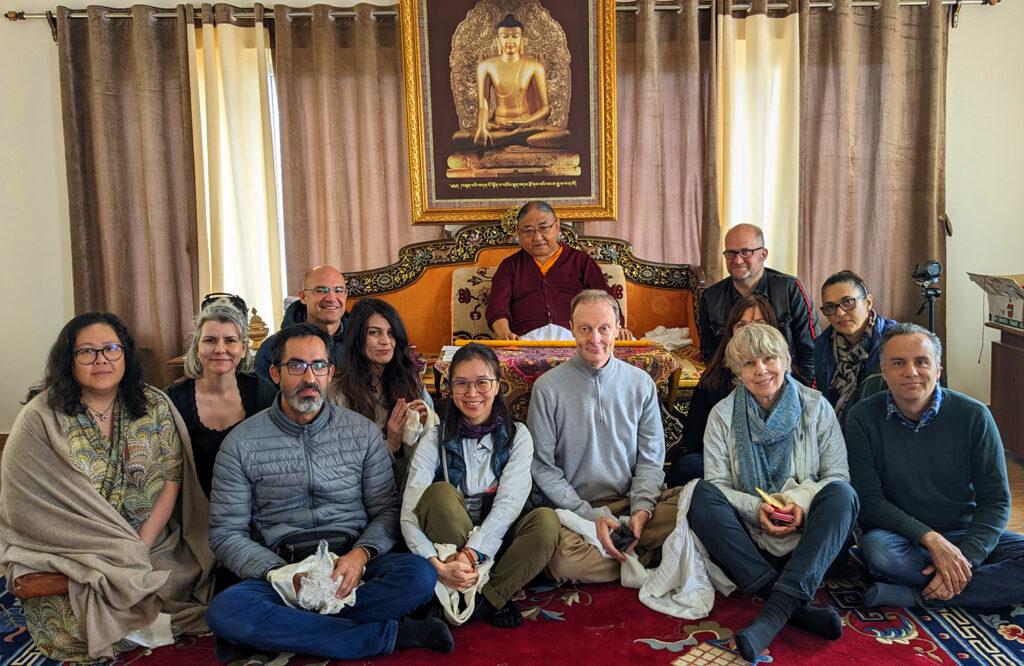
Over the last few years, many of us have started to take what we’ve learned and put it into practice, leading study courses and intensive retreats and arranging public events—both in our own sanghas and out in the wider world. It’s been incredibly rewarding to see our teachings become a real source of support and guidance for fellow practitioners. Some of us have already launched initiatives such as podcasts (for example, Radio Buddha, whose content covers a diversity of Buddhist topics), organized retreats they are regularly guiding themselves, or co-taught seminars with Tibetan masters of different traditions. Some have also already finished teaching long-term study courses on classical Buddhist texts.
Just this year, we received a great reminder of the impact the Milinda Program is having. “Ocean”—an initiative of the project The Chronicles of Chögyam Trungpa Rinpoche—put together a special series of philosophy classes and brought us in to teach, trusting us to guide students through some core Buddhist topics. I have heard that the students really enjoyed receiving the lengthy Indian classical Buddhist texts’ main points and instructions condensed in a nutshell.
“In addition to teaching dharma classes when asked, I am also applying to support the educational projects within the Khyentse Mandala, especially curriculum writing. Within my arts practice, I draw on what I’ve learned to support having a strong foundation for my curatorial and creative work.”
— Harry Einhorn, Chögyam Trungpa lineage, Taiwan
“I’m teaching a little Mahayana at retreats and coleading retreats. I still feel new to studying the dharma myself. The main way I apply what I’ve learned is to keep putting the teachings into practice and inspire the people I meet to investigate and practice themselves. I also do my best to keep explaining the difference between psychotherapy/psychology and dharma practice when it’s appropriate. I try to bring some of what I’ve learned into my daily work, although in very subtle ways.”
— Anja Lang, Siddhartha’s Intent, Denmark
“As an instructor, I especially hope to use what I have learned to make these teachings accessible without losing their authenticity. Completing Milinda feels like having been given a good foundation.”
— Carlo Carranza, Siddhartha’s Intent, USA
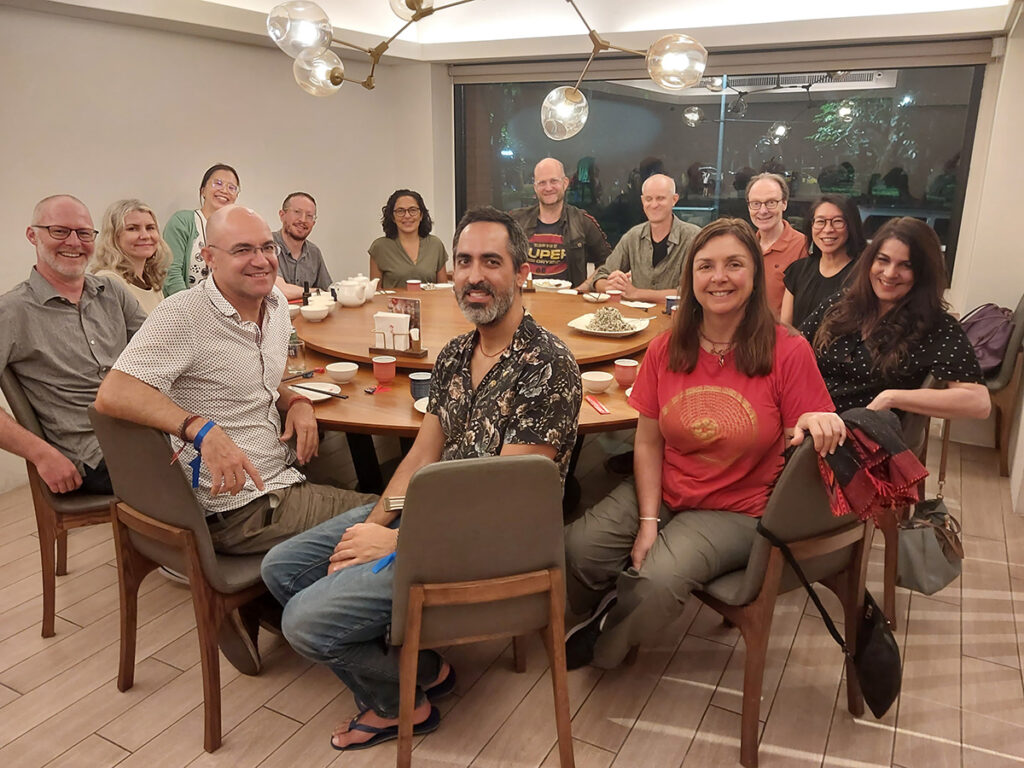
From the very beginning, Rinpoche envisioned our 10-year cycle as a pilot program. Instead of handing us a rigid curriculum, he wanted us to use this cycle as a testing ground to experiment and figure out what actually works when trying to connect traditional dharma and modern minds. Rinpoche frequently referred to us as “guinea pigs” he was placing in this “experiment.”
Now, armed with a decade of trial and error, he has asked our committee to design the blueprint for the next iteration. We are gearing up to launch the new cycle in 2028, and the plan is for graduates from our current cohort to rise to the challenge and lead it, working alongside senior teachers.
It feels incredible to see Rinpoche’s original vision come full circle. Having prepared for so many years, we’re finally ready to apply what we’ve learned.
Featured image: Milinda program participants, Buddha Pada Institute, Kalimpong, India, March 2024.
All photos courtesy the Milinda Program.
