
Tara Rokpa Therapy Training in Zimbabwe
The Tara Rokpa Therapy project is a self-help therapy process based on Buddhist philosophy and Western psychological and therapeutic approaches to healing, self-empowerment, and compassionate action.
According to the World Health Organization, an estimated 3.9 percent of the world population has experienced post-traumatic stress disorder (PTSD) at some stage of life. Among military service Veterans, levels of trauma from sexual assault, gender-based violence, and combat are even higher than PTSD levels in the general population. Currently, Veteran suicide rates are at the highest level in recorded history, with deaths by suicide in the United States at over 6,000 per year and rising.
Since 2023, the New Mexico-based Life Transition Meditation Center (LTMC) has held an annual 3-day retreat specifically to address PTSD and other mental health challenges among military service Veterans, inclusive of discharge status, gender, race, sexuality, or other identities. The center was founded in 2003 by Ralph Steele, himself a combat Veteran with over 40 years’ experience in Buddhist practice, counseling, and group process. Rooted in Buddhist principles, LTMC holds regular in-person and virtual classes and meditation retreats for anyone facing mental health challenges. By integrating contemplative practices with modern approaches to emotional well-being, LTMC empowers people to cultivate inner stability, alleviate their suffering, and build a foundation for long-term healing and connection.

Partly funded by a Khyentse Foundation Trisong grant, the second annual Veterans Meditation Retreat in 2024 was attended by 40 Veterans from New Mexico and elsewhere. Led by experienced meditation instructors and Veteran peer mentors, the Veterans retreats integrate somatic meditation, yoga, mindfulness practices, guided contemplation, and peer-led discussion to help participants manage PTSD, anxiety, and emotional distress. The retreats also aim to reduce social isolation by fostering strong peer connections and creating a sustainable post-retreat support network to ensure that the Veterans remain connected to ongoing healing resources. Many of the participants are from Native American, unhoused, disabled, and rural communities, and face significant barriers to traditional mental health care.
“I am so grateful. It’s almost overwhelming how much information is being processed and how much we’re receiving, so it’s been just a blessing.” — Leigha Miller, Air Force Veteran
“In this retreat, we use Buddhist principles not as dogma, but as a living framework for healing,” says Ralph Steele, who has trained in several Buddhist traditions. “Veterans learn to understand their suffering in a new way. We guide them through the Four Noble Truths—not as abstract philosophy, but as a mirror of their own lived experience. They come in with pain, trauma, and disconnection. We help them recognize the cause of that suffering, begin to loosen its grip, and take steps toward liberation using the Eightfold Path as a guide. We adapt the language to make it accessible—replacing ‘right’ with ‘healthy’ so that we talk about healthy speech, healthy effort, healthy mindfulness. Veterans relate to that. They know what unhealthy speech and actions have done in their lives, and they’re ready for another way.”
Over the decades, Buddhist practice has become my foundation. It gave me a way to sit with what I didn’t want to face. It taught me that pain isn’t the problem—it’s how we relate to it.
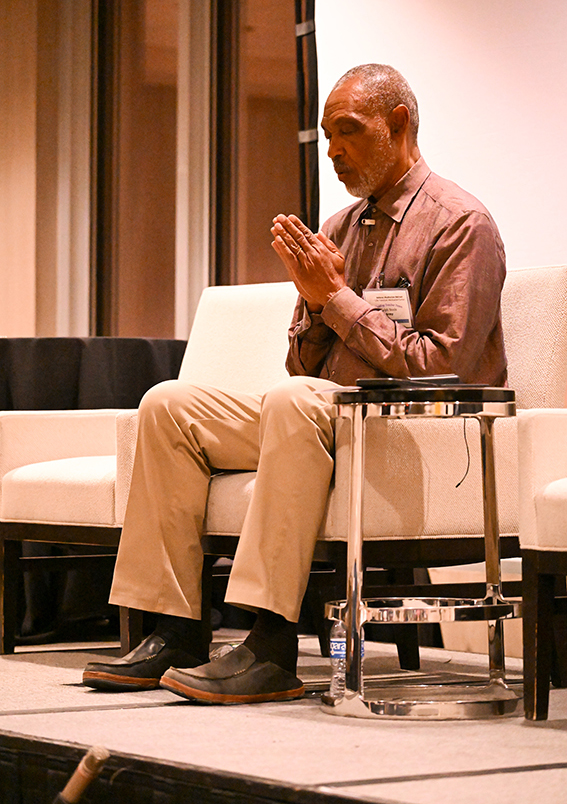
Ralph Steele, Life Transition Meditation Center founder and executive director
Launched in 2024, a key component of the Veterans retreats is the Train the Trainer initiative, which has a 5-year teacher-training program built within the program. This empowers Veterans to become peer mentors and meditation guides themselves. After each retreat, between five and ten Veterans are selected to enter the peer-mentor-training program. This initiative ensures that Veterans who find healing through the retreat can pay it forward by guiding others on the same path, reinforcing the peer-led, community-based model that makes LTMC’s approach so sustainable. Ralph Steele is the primary guiding teacher in the program, mentored by Jack Kornfield, Joseph Goldstein, Jon Kabat-Zinn, and Raja Selvam for trauma-informed training.
Feedback from the 2024 retreat demonstrated overwhelmingly positive outcomes, with 97 percent of attendees satisfied with the retreat’s duration and instruction, and 92 percent reporting that it was highly relevant to their well-being. All the participants planned to continue mindfulness practices such as walking/moving and sitting/standing meditation, reinforcing the retreat’s long-term impact. Many reported improved ability to manage emotions, respond to distress, and de-escalate from crises, and participants also noted that the retreat helped them address social anxiety, grief, trust issues, and hypervigilance. Many shared that their families have benefited from their participation, as they have become more present, patient, and open-hearted in their relationships.


One of the greatest successes was the retreat’s ability to help Veterans reconnect—with themselves, their emotions, and their peers. Many Veterans expressed how rare it was to be in a healing space alongside fellow service members, which significantly contributed to their sense of belonging and emotional safety. The post-retreat virtual check-ins and peer-led support groups have also seen strong engagement, ensuring continued practice of the techniques learned.
“The generosity of Khyentse Foundation’s patrons and donors has allowed us to bring Buddhist wisdom and mindfulness practices to a community that greatly benefits from them,” says Ralph Steele. “Many Veterans come to the retreat feeling overwhelmed by trauma, disconnected from themselves, and searching for a way forward—and they leave with practical tools, a supportive community, and renewed hope.”
“Just look in their eyes and you can see that this has an impact. … Given the gift of the power to heal oneself, that’s priceless.” — Jeret Snider, Army Veteran
“We also hope that what we create will serve as a template for other communities and states eager to give people who are traumatized—people who have been or are homeless, incarcerated, or struggling with addictions, for example—the welcome and community they deserve and the opportunity to change their lives, too. We hope that we can help light the way to healthier and more stable individuals, families, and communities.”
Watch a video of testimonials by 2024 retreat participants.
Featured image above: Ralph Steele, Life Transition Meditation Center founder and executive director.
All photos courtesy Life Transition Meditation Center.


