
2,000-year-old Gandhari Buddhist Manuscripts Find Permanent Home in Pakistan
A major collection of ancient Gandhari birch bark Buddhist manuscripts was donated to the Islamabad Museum, Pakistan, on December 20, 2022.
The Islamabad Museum Collection of Gandhari Buddhist Birch Bark Scrolls—An Update
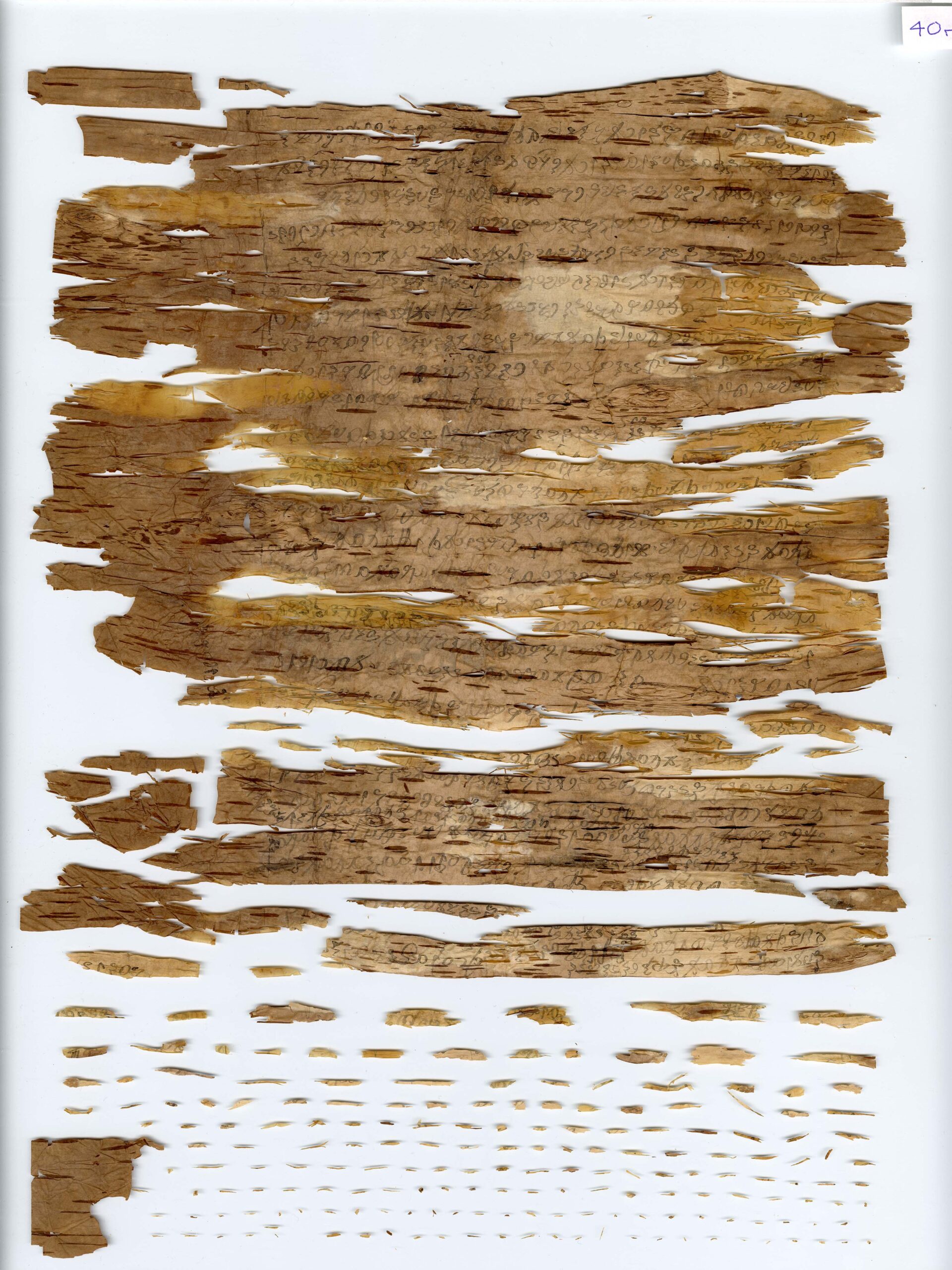
I am immensely pleased to announce that Khyentse Foundation will offer support for the next phase of the Gandhari Manuscript Project’s (GMP) work to conserve and publish the Gandhari Buddhist birch bark scrolls housed in the Islamabad Museum, Pakistan.
In my February 2023 article “2,000-year-old Gandhari Buddhist Manuscripts Find Permanent Home in Pakistan,” I reported on Khyentse Foundation’s 2022 donation to the Islamabad Museum of a major collection of ancient Gandharan birch bark scrolls containing Buddhist texts in the Gandhari language and Kharoshthi script. Dating from approximately the 1st century BCE to the 2nd century CE, these Buddhist manuscripts are among the oldest discovered so far and bring us closer to the time of the Buddha than we previously thought possible.
The conservation, imaging, study, and publication of these valuable manuscripts are being undertaken by members of the GMP under an agreement between the Department of Archaeology and Museums (DOAM), Pakistan, and the University of Sydney, Australia. The GMP consists of an international group of scholars with expertise in the Buddhist literature, languages, history, art, archaeology, and epigraphy of ancient Gandhara, as well as in digital humanities and museum governance and curatorship.
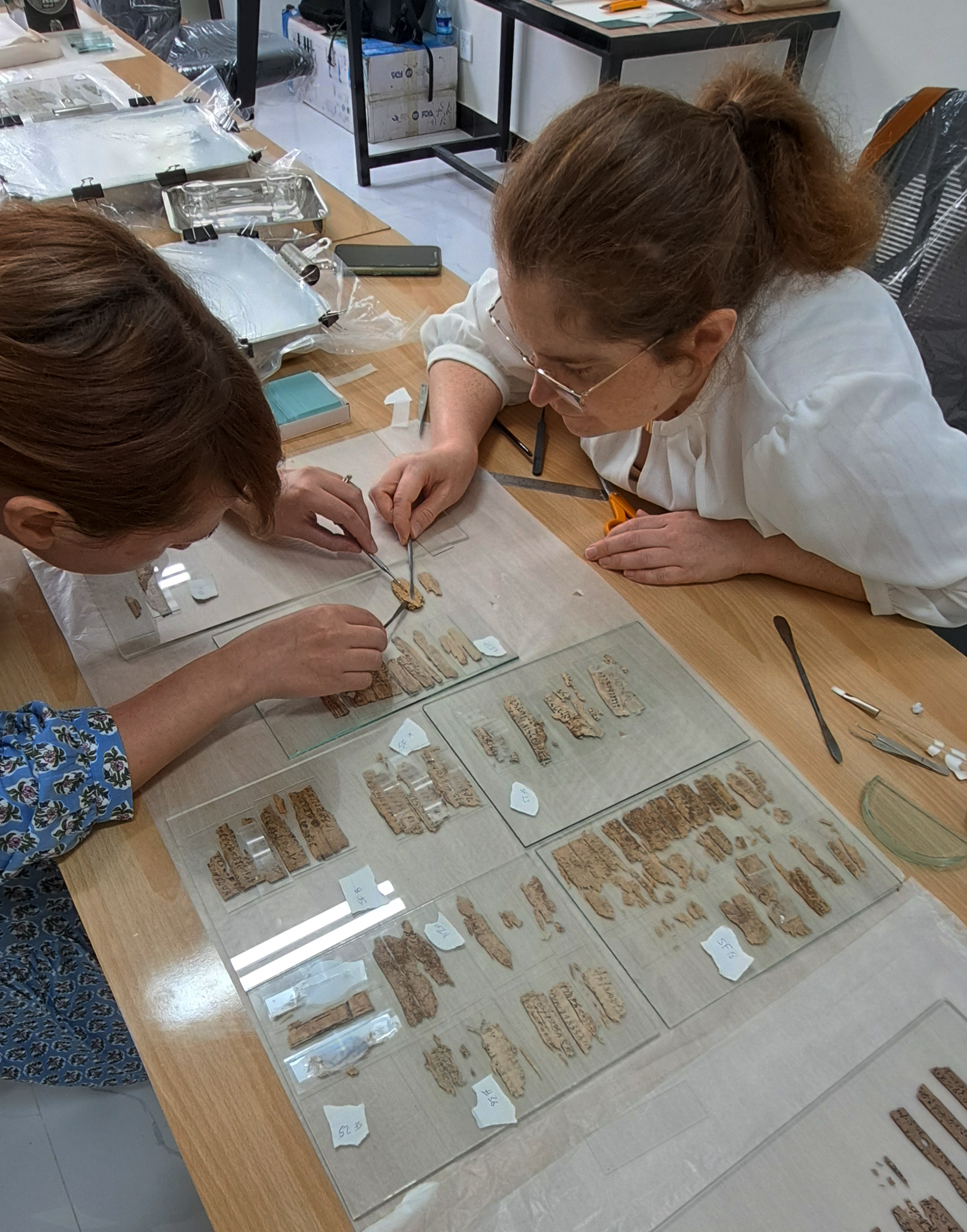
The GMP was able to embark on the first phase of the project in December 2023 with further funding from Khyentse Foundation and additional funding from other Buddhist foundations, leading universities and institutes in the US and Canada, and Buddhist communities in Taiwan. This first phase involved building the conservation laboratory for the manuscripts (neither of which the Islamabad Museum possessed previously), processing the as yet unconserved manuscripts and conserving between conservation-quality glass those scrolls and scroll fragments that had previously been encased in plastic sheets, producing high-quality scans of the manuscripts, radiocarbon-dating selected manuscripts, and supporting the running of the conservation laboratory at the museum.
With the completion of the conservation laboratory, our project conservators were able to begin the conservation of these very fragile birch bark manuscripts, which I supervised. So far, we have had two highly successful conservation sessions, conserving 28 of the 38 unconserved scrolls and reconserving in glass several of the manuscripts previously conserved in plastic. Unrolling the manuscripts is highly skilled work, with some scrolls taking as long as a week to process. It was very exciting to witness the unrolling of these scrolls and to be the first in almost 2,000 years to read the texts they preserve.
The texts these newly conserved manuscripts contain—treasures that have remained hidden for two millennia—represent a great diversity of text types. One scroll conserved this July turned out to contain a Gandhari version of the canonical text known in Pali as the Itivuttaka (“Thus It Was Said”) and in Chinese as the Benshijing 本事經 (Taishō 765). It consists of short discourses of the Buddha in which he articulates a topic first in prose, then in verse. For example, in one discourse the Buddha states that there are three individuals who come into the world for the benefit of humans and gods: a Buddha, a Buddha’s disciple who is an arhat, and a Buddha’s disciple who is still in training, all three of whom teach the dharma for the good of the many.
Another text describing the death of the Buddha in verse appears to lack a parallel and is most likely a local Gandharan composition. Yet another is a verse text that discusses the causes of happiness and suffering.
Several texts can be loosely described as belonging to the Vinaya genre in that they provide guidance for the behavior of monastics and laypeople. These include an account of the procedure for ordaining a monk, which ends by listing those who should not to be ordained, such as those over 70; a text that describes the distribution of a monk’s robe and bowl after his death; and another that provides a classification of laymen on the basis of their practice and describes the ordination of the Buddha’s son, Rahula.
A significant number of the newly revealed texts are Mahayana in character, including those with known parallels in other languages and those that lack parallels and thus may be local compositions. An example of the former is Chapter 4 of the “Discourse on the Meditation of Direct Encounter with the Buddhas of the Present” (Pratyutpannabuddhasaṃmukhāvasthitasamādhi-sūtra), in which the Buddha lists sets of four practices by means of which bodhisattvas obtain the concentration, or samadhi, that this text promotes. An example of such a set of four practices is: having an image of the Buddha made; copying this text in manuscript form, this manuscript itself being a concrete example of this practice; establishing the conceited in the dharma, which is free of conceit; and being devoted to the protection and preservation of the Buddha’s teaching.
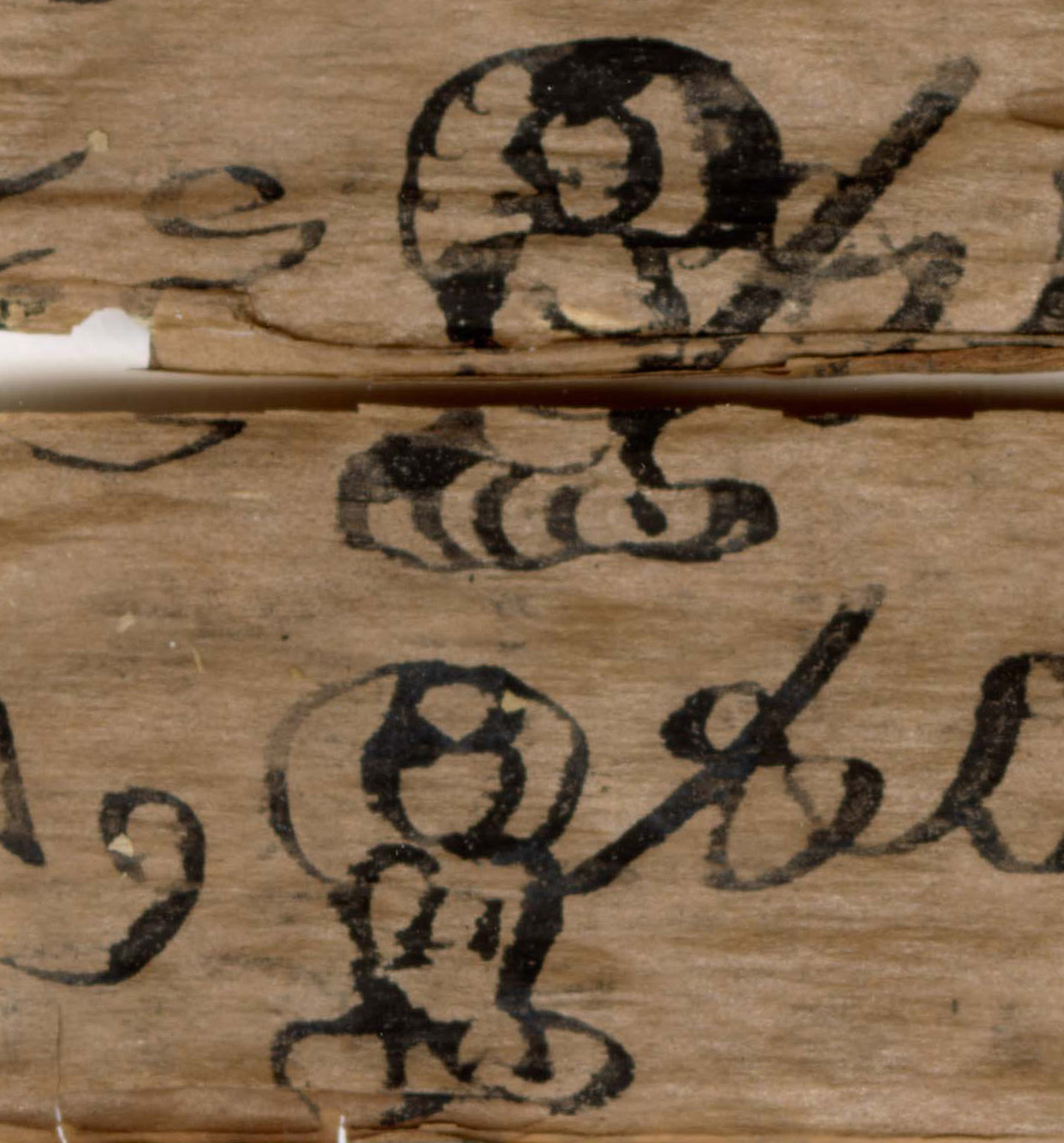
The Mahayana texts without parallel include one that records the names of Buddhas and the benefits of honoring them, with a small Buddha image marking the end of the entry for each Buddha, and another that describes the lay practice of bringing to mind the Buddha (buddhānusmṛti) and its beneficial results.
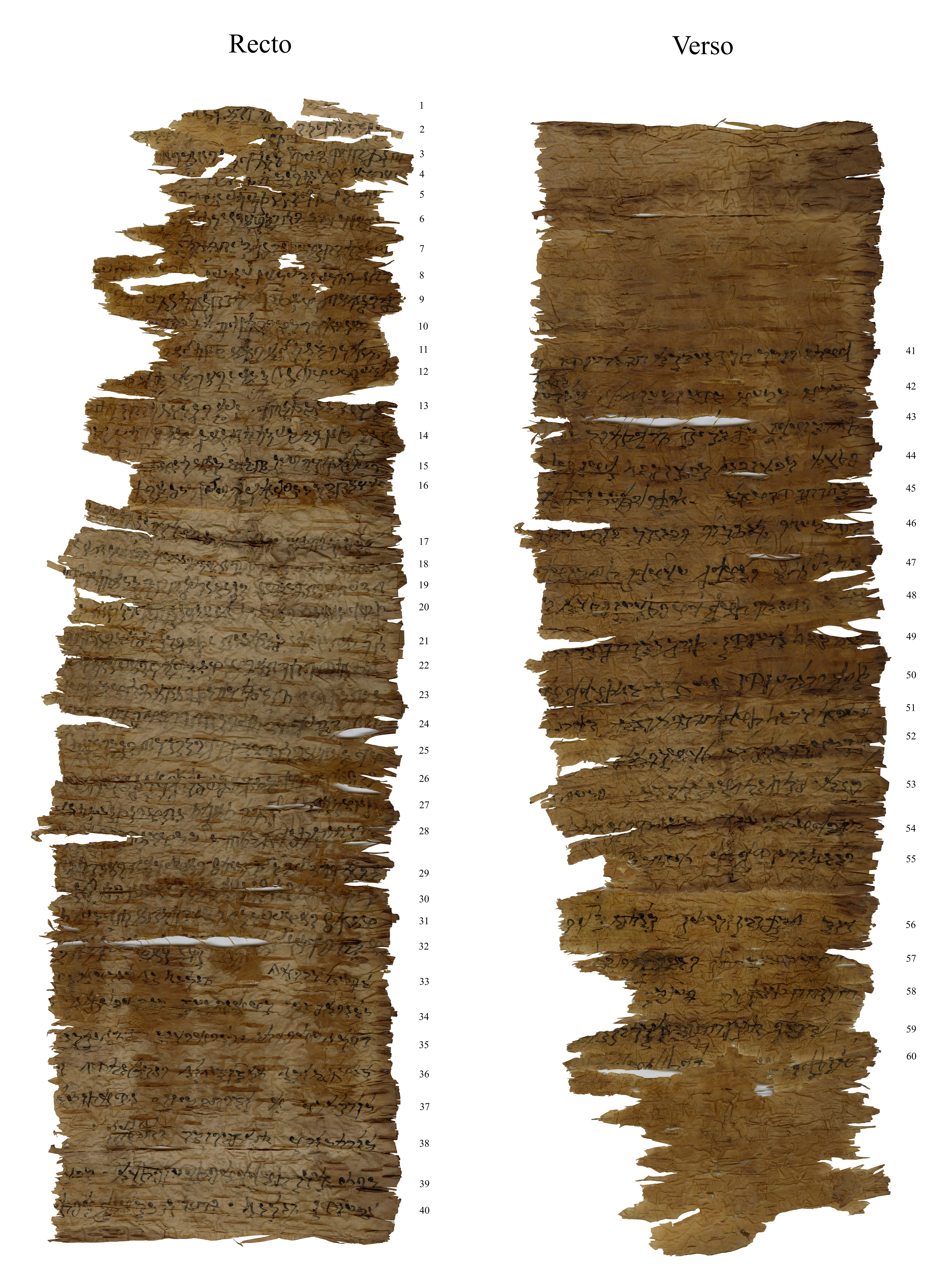
Particularly interesting is a long discourse in which the Buddha predicts the future rebirth states of a yaksha general (semi-divine being) and his son. These include the yaksha general becoming the historical Kushan king Vema Takhtu, who ruled Gandhara during the period when these manuscripts were written, and his eventual attainment of Buddhahood. This text, which is undoubtedly a local Gandharan composition, shows that in ancient Gandhara some Buddhist authors could incorporate powerful political figures of their day in their compositions, perhaps in this case to court favor with a ruler in a position to influence the prosperity of their community.
With two-thirds of the scrolls conserved, GMP members have now begun the second phase of the project. This entails the scholarly publication of the manuscripts and making them available to wider interested audiences, especially in digital form and particularly to communities in Pakistan, for whom these manuscripts represent an important part of their cultural heritage. This includes making selected materials available in Urdu and Pashtu, the two main languages of the region. The development of a platform and sophisticated tools for the digital publication of these manuscripts and other textual material is central to these efforts, an example of which is the GMP’s launch of the fully digital Journal of Gandhāran Buddhist Texts based at the University of Sydney. The publication of many of the texts in the collection will take years of dedicated scholarly engagement.
A further valuable component of this project is its goal of training Pakistani conservators in manuscript conservation and Pakistani students in the languages required to read, study, and publish these manuscripts—skills that Pakistan currently lacks. To this end, the project began training a DOAM staff member while conserving scrolls at the Islamabad Museum this July and will conduct a conservation workshop at the museum in the near future. In an effort to invigorate the teaching of Gandhari and Sanskrit in Pakistan, project member Jason Neelis (Wilfrid Laurier University) and I conducted a 3-day workshop, “Early Buddhist Manuscripts and Inscriptions from Pakistan,” at Taxila Institute of Archaeology and Civilizations, Quaid-i-Azam University, Islamabad, in December 2024.
Khyentse Foundation’s new funding for the GMP’s work on the manuscripts makes a major contribution to the funding required for the next 5-year phase of the project. It will enable us to complete the conservation of the manuscripts and to publish a significant number of the texts they preserve. On behalf of the GMP, I would like to express our sincere gratitude to Khyentse Foundation and to Dzongsar Khyentse Rinpoche for their ongoing support of this project.
Featured image above: Manuscript with discourse in which the Buddha predicts the future rebirth states of a yaksha general and his son, The Islamabad Museum, Pakistan. Photo by Mark Allon.