
The Legacy of Khyentse Foundation Endowed Chairs

A KF25 Special Edition on Academic Development

Endowing chairs in Buddhist studies is an integral part of establishing a system of patronage to share the Buddha’s wisdom. As such, it is one of Khyentse Foundation’s priority projects.

“It is my wish to endow chairs in Buddhist studies at major universities because I wish to promote the academic study of Buddhism, to produce great Western Buddhist scholars, and to develop the right view in Buddhist studies in order to properly establish Buddhism in the West in the long term.”

— Dzongsar Khyentse Rinpoche, 2001

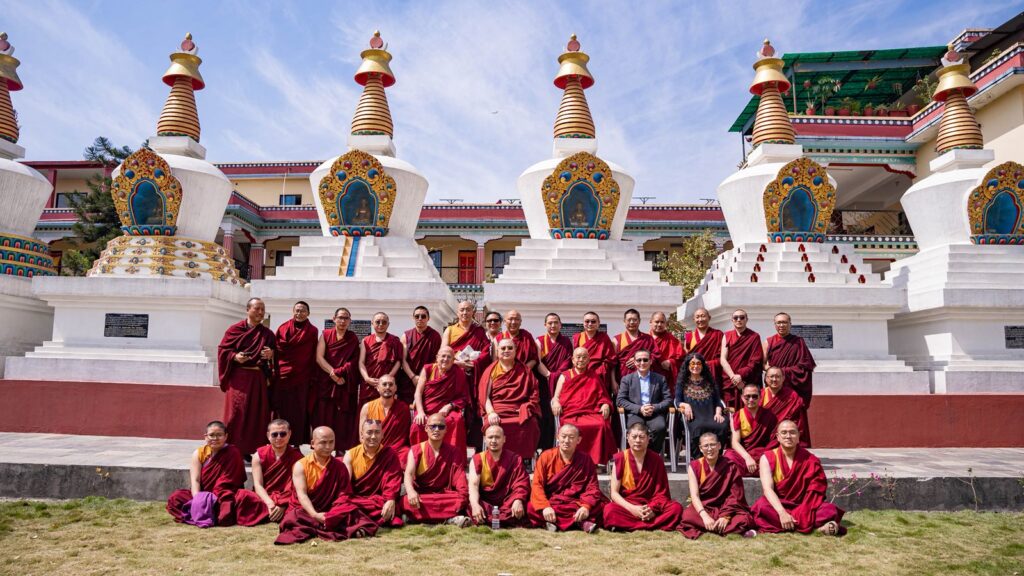
Dorji Wangchuk and Orna Almogi of the Khyentse Center for Tibetan Buddhist Textual Scholarship (KC), University of Hamburg, with Shechen Rabjam Rinpoche and other participants in the KC-led Academic Research Program Initiative (ARPI) workshop “Tibetan Buddhist Textual Scholarship: Means and Methods of Research,” Shechen Monastery, Nepal, February 2023. Photo courtesy the Khyentse Center for Tibetan Buddhist Textual Scholarship.

In traditionally Buddhist countries in the East, academic excellence has been achieved primarily in monasteries and dharma institutes. In the West, on the other hand, rigorous academic study and serious Buddhist scholarship are presently found only at a few major universities.

As Buddhism migrates to the West, we want to ensure that its profound philosophy and rich spiritual, cultural, and literary legacy are studied and understood in their entirety. It is therefore important to develop the right approach to the study of Buddhism, not only in relation to its long history but with great respect for and understanding of the living traditions as practiced today.

In North America in particular, Buddhism is often introduced in a much-simplified and watered-down version, especially as portrayed by the media. A multitude of publications relate Buddhism to New Age and self-healing trends, despite its 2,500-year history.

The academic study of Buddhism at the university level should promote the serious study of the Buddhadharma, and ideally, should also bridge the gap between academia, practice, and general interest. An endowed chair—at the right institution and with the right faculty—should advance scholarly understanding of and research in Buddhism, foster engagement with practicing sanghas, and bring an increased appreciation of Buddhism to communities interested in its history and in the teachings of the Buddha.

Khyentse Foundation Endowed Chairs/Professorships

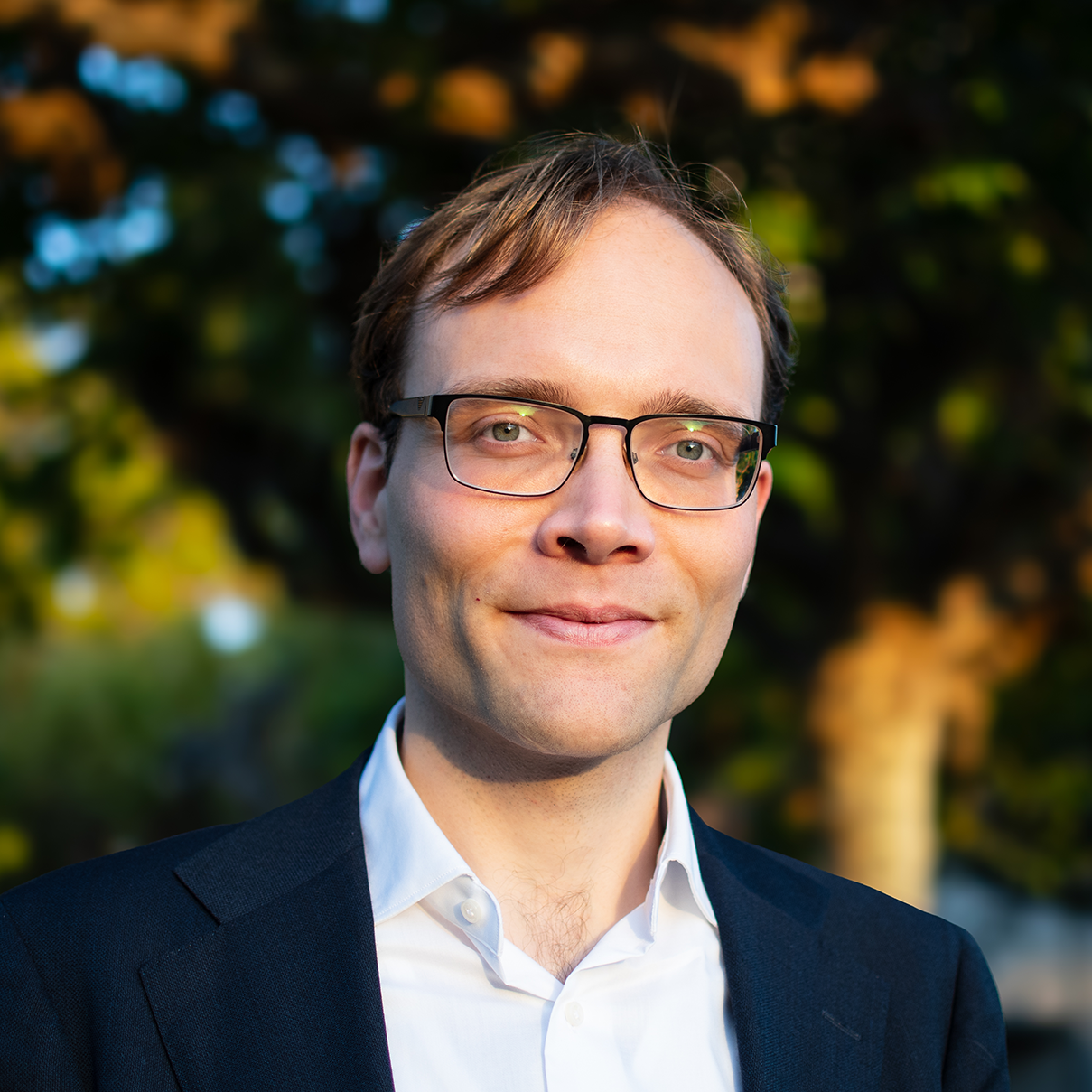
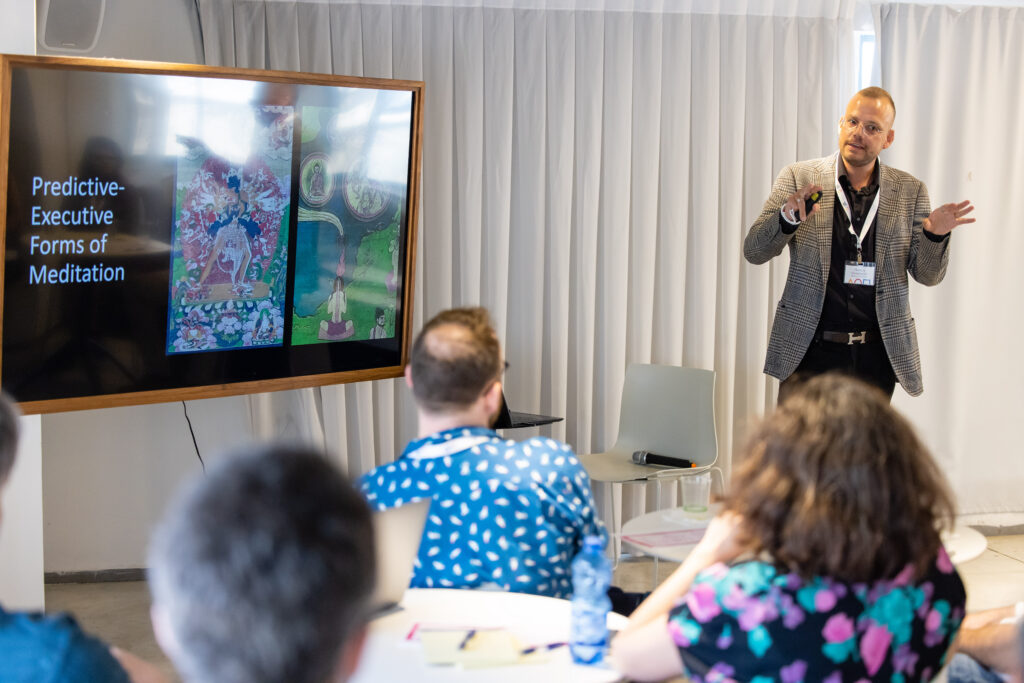
Flavio A. Geisshuesler, KF-Macready Senior Lecturer in Tibetan Buddhism, The University of Sydney, at the Azrieli Foundation conference for international postdoctoral fellows, Tel Aviv, Israel, May 2022. Photo by Shauli Lendner.

Over the past 2 decades, Khyentse Foundation has evaluated various university environments to identify the institutions, among qualified universities, that are most worthy of our support. Selecting the institutions has not been easy; there are far more qualified universities than our resources can cover. Based on the foundation’s research findings and the recommendations of our advisors and friends, we have established seven Khyentse Foundation endowed chairs/professorships at institutions around the world:

·       University of California, Berkeley, USA – 2006
·       University of Michigan, USA – 2018
·       The University of Sydney, Australia – 2018
·       Ludwig Maximilians University of Munich, Germany – 2020
·       The Hebrew University of Jerusalem, Israel – 2021
·       International Buddhist College, Thailand – 2022
·       National University of Singapore – 2025

“I feel with this one contribution, we’ve started the equivalent of 100 monasteries.”

— Dzongsar Khyentse Rinpoche, on establishing the first Khyentse professorship in Buddhist studies at the University of California, Berkeley, in 2006

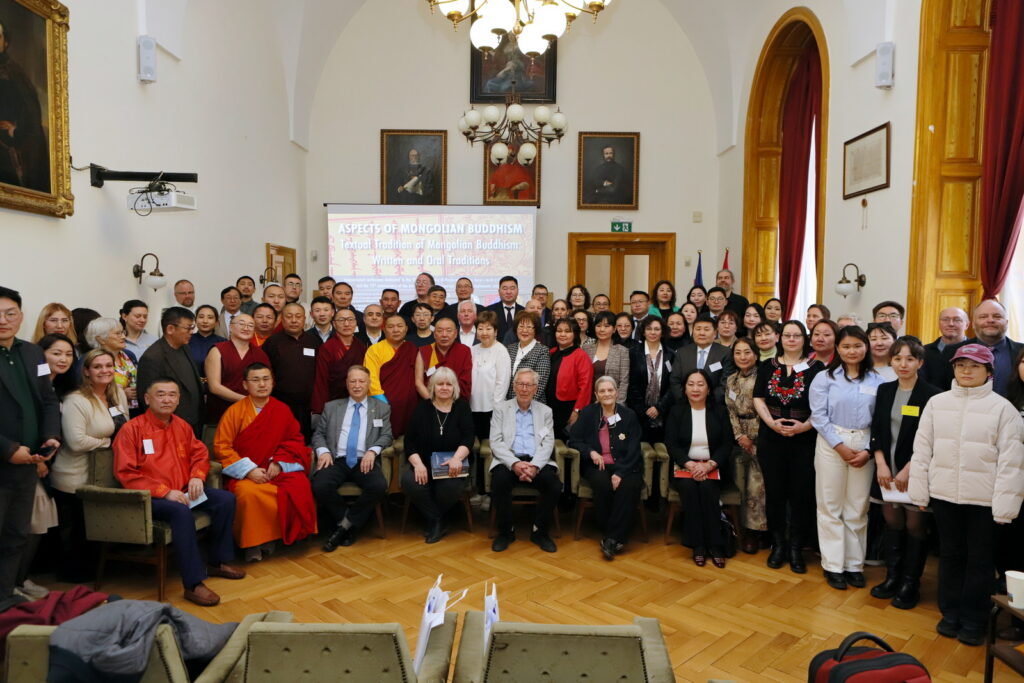
Participants at the conference “Textual Tradition of Mongolian Buddhism: Written and Oral Traditions” co-organized by the KF-funded Budapest Centre for Buddhist Studies at Eötvös Loránd University and Károli Gáspár University, Budapest, Hungary, April 2025. Photo courtesy Eötvös Loránd University.

The practice of endowing chairs, in which a university seeks private sponsorship to create a permanent faculty position in a specific area of study, is well established in North America. The sponsor gifts a lump sum to the university, from which the investment interest is used to support the faculty position on an ongoing basis. In Europe, Asia, and elsewhere there are fewer such established endowment structures, so in some cases alternative funding arrangements have been made to create faculty positions and program activities to strengthen the offerings in Buddhist studies.

The most important impact of an endowed chair, as opposed to a grant or lectureship, is its “permanence.” Without endowments, Buddhist studies positions are often the first to be cut when university budgets tighten. Endowed chairs provide a lasting legacy that benefits many generations of scholars and students. In some cases, this structural security can mean the difference between a program’s survival and its extinction.

“Ensured,” strong Buddhist professorships and studies programs can produce quality Buddhist students, scholars, and teachers. Authentic Buddhadharma can be preserved, studied, researched, and ultimately shared with the community. The ripple effect is both quantitative and qualitative, establishing Buddhism as a mainstream body of study and philosophy accessible to everyone who goes through the university system.

Taken together, the seven Khyentse chairs span North America, Europe, the Middle East, Southeast Asia, and the Southern Hemisphere. This genuine global distribution ensures that Buddhist studies are not concentrated solely in localized elite institutions, ensuring scholarly diversity in the field and the accessibility of a Buddhist studies education to students around the world.

“A century and a half ago, Jamyang Khyentse Wangpo transformed Buddhist education by returning to the roots of the teachings, breaking down sectarian boundaries, and renewing Buddhism for a changing world. Now Dzongsar Khyentse Rinpoche has extended this rich tradition into the West by bringing Tibetan Buddhist studies to one of our top universities.”

— Professor Jacob Dalton, Khyentse Foundation Distinguished University Professor in Tibetan Buddhism, University of California, Berkeley

Other University Collaborations

With endowed chairs as the anchor, KF has worked with over 40 universities in other capacities and to varying degrees in order to create a strong, worldwide academic network. The foundation has been instrumental in the establishment of centers for Buddhist studies at the University of Hamburg in Germany, Eötvös Loránd University in Hungary, and Leipzig University in Germany. We have also supported Buddhist language instructors (in Sanskrit, Pali, and/or Tibetan) at Savitribai Phule Pune University in India, the University of Edinburgh in the UK, and Yale University, Columbia University, Rice University, Northwestern University, and the University of Washington in the US.

Another important program is an extensive range of scholarships, fellowships, and awards for undergraduate and graduate students at universities around the world. We also offer the Goodman Lecture Series, where participants have the chance to listen to and interact with the foremost scholars in Buddhist studies at our partner institutions and universities.

Some Feedback

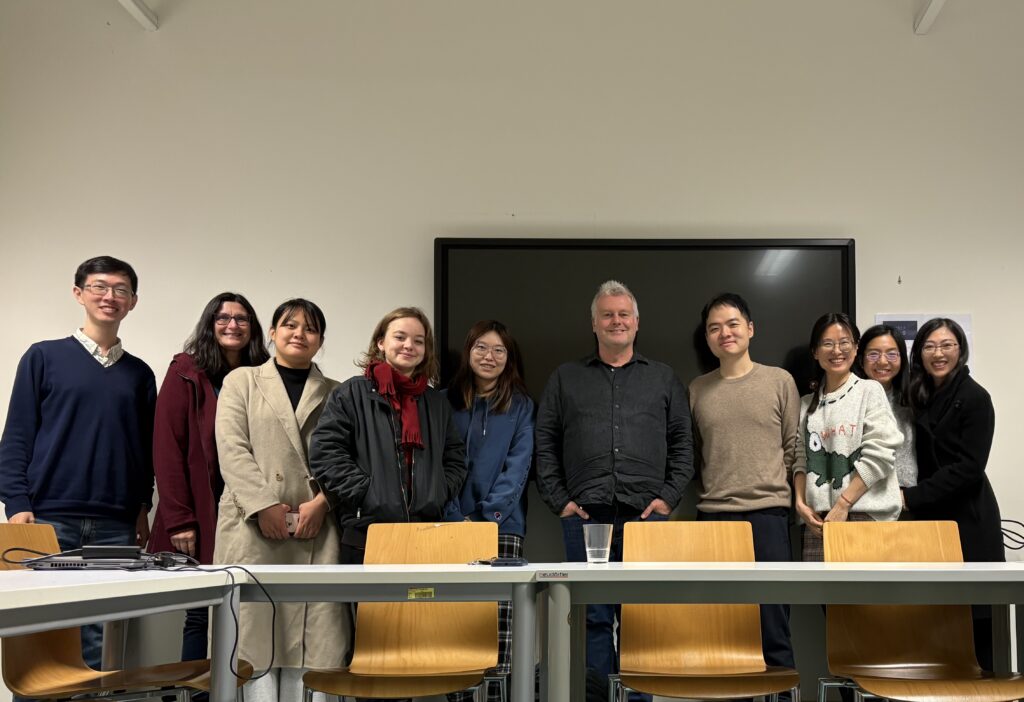
Jacob Dalton, Khyentse Foundation Distinguished University Professor in Tibetan Buddhism, University of California, Berkeley, with students at the University of Vienna, December 2025. Photo courtesy Jacob Dalton.

“I wish to congratulate Khyentse Foundation on celebrating a quarter century of real vision and generosity that have reshaped the whole academic study of Buddhism worldwide and definitely here at UC Berkeley, enriching our education program in countless ways. … We are not only celebrating KF’s 25 years of philanthropy but the transformation of the entire field of study that has been made possible by Khyentse Foundation’s unwavering commitment to wisdom and learning.”

— Professor Jacob Dalton, Khyentse Foundation Distinguished University Professor in Tibetan Buddhism, University of California, Berkeley, at the annual Khyentse Lecture, February 2026

“The Khyentse professorship has been transformative for Buddhist studies at the University of Sydney. It has helped sustain and expand teaching in Indo-Tibetan Buddhism, Sanskrit, Tibetan, and contemplative traditions, while also creating pathways for students to move from language learning into advanced Buddhist studies and research. In my own work, it has provided the institutional foundation for developing new research on Indo-Tibetan contemplative traditions and for building a distinctive Sydney profile in Buddhist studies that combines classical textual study, contemporary relevance, and student-centered teaching.”

— Flavio Geisshuesler, KF-Macready Senior Lecturer in Tibetan Buddhism, The University of Sydney, April 2026

Appreciation

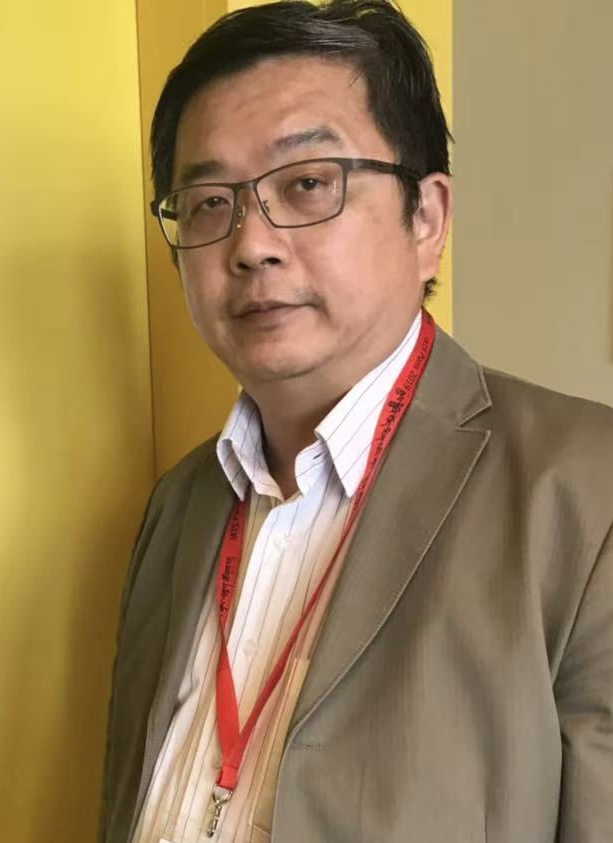
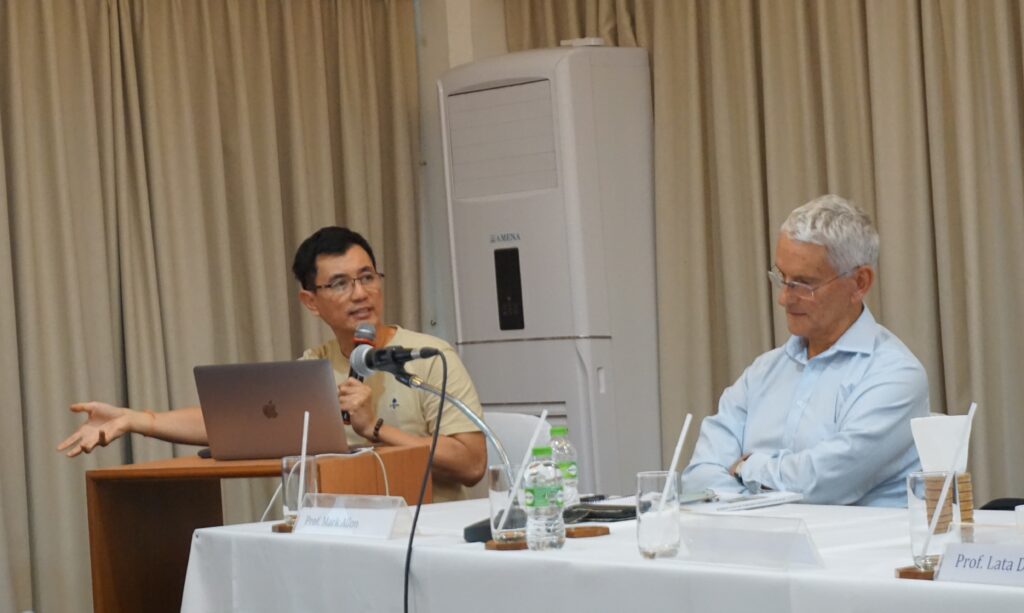
Eng Jin Ooi, Palyul-Khyentse Chair in Buddhist Textual Studies, International Buddhist College (left), with Mark Allon, associate professor of South Asian Buddhist studies, The University of Sydney, at a Buddhist language workshop organized by Chulalongkorn University and the Fragile Palm Leaves Foundation, sponsored by the Maha Chakri Sirindhorn Foundation with Khyentse Foundation, Hua Hin, Thailand, November–December 2025. Photo by Manasada Navasiritanaroj.


The success of our investment in academia has very much depended on collaboration with our academic partners, at both the faculty and administration levels. It is no exaggeration to say that without the cooperation and hard work of our “champion advocates,” these important alliances would not have been possible. It is therefore appropriate to take this opportunity to acknowledge and thank some of the friends in academia who have worked tirelessly with us to expand and elevate their Buddhist studies offerings: Mark Allon, Naomi Appleton, Imre Hamar, Jens-Uwe Hartmann, Sarah Jacoby, Anne Klein, Donald Lopez, Robert Sharf, Eviatar Shulman, Peter Skilling, Alex von Rospatt, and Dorji Wangchuk, to name just a few. And last but not least, we acknowledge our invaluable advisor the late E. Gene Smith, who was instrumental in helping us select UC Berkeley for our first endowed chair. We are grateful to you all for making KF’s work possible.

Equally, none of this would have been possible without the collective support of thousands of KF sponsors from over 40 countries, many of whom donate to KF on a recurring basis. Their immeasurable generosity, open-mindedness, and devotion to the dharma have helped the foundation fulfill Rinpoche’s aspiration to plant the seeds for the authentic Buddhadharma to firmly take root by supporting academic development. Thank you for making Rinpoche’s vision manifest.

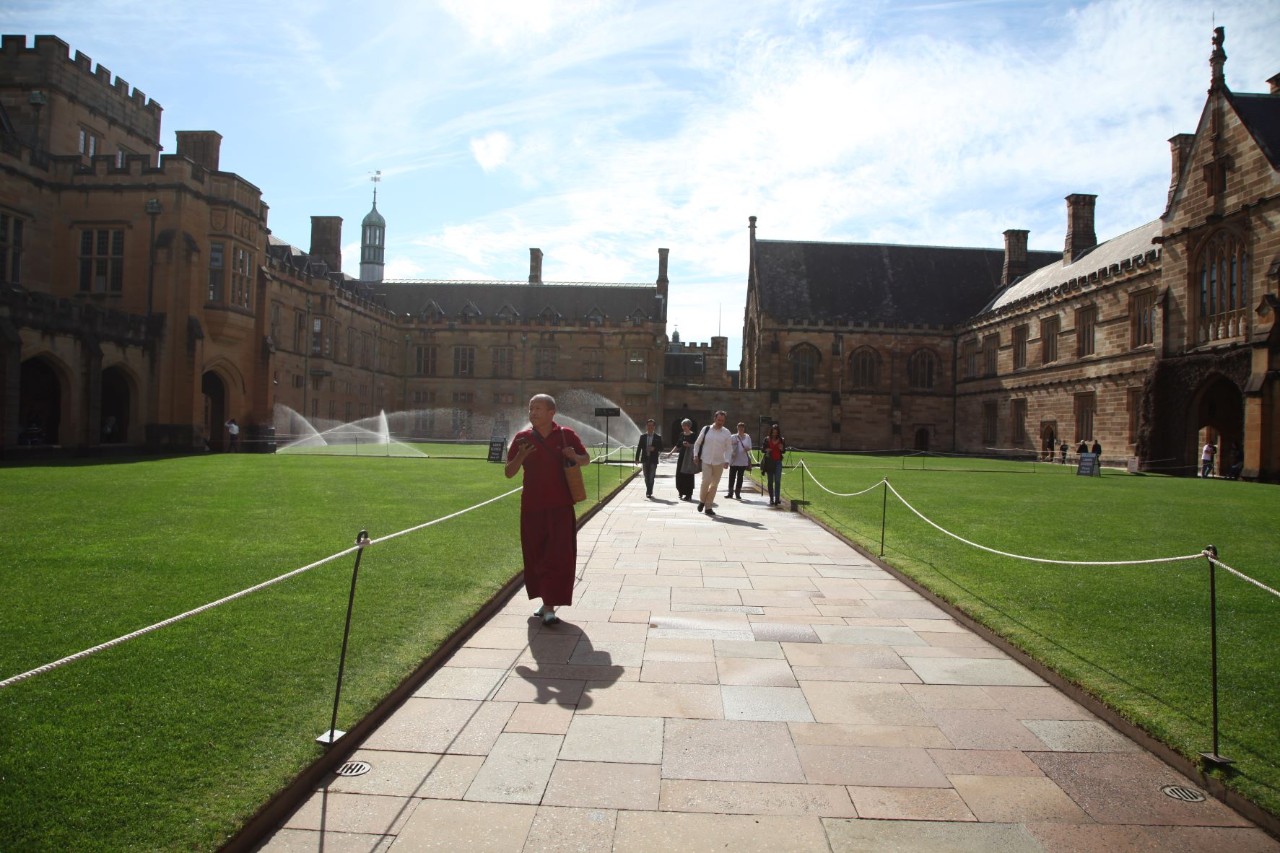
Featured image above: Dzongsar Khyentse Rinpoche visiting the University of Sydney at the inauguration of the KF-UBEF Lectureship, August 11, 2017.