Building the Khyentse Foundation Database
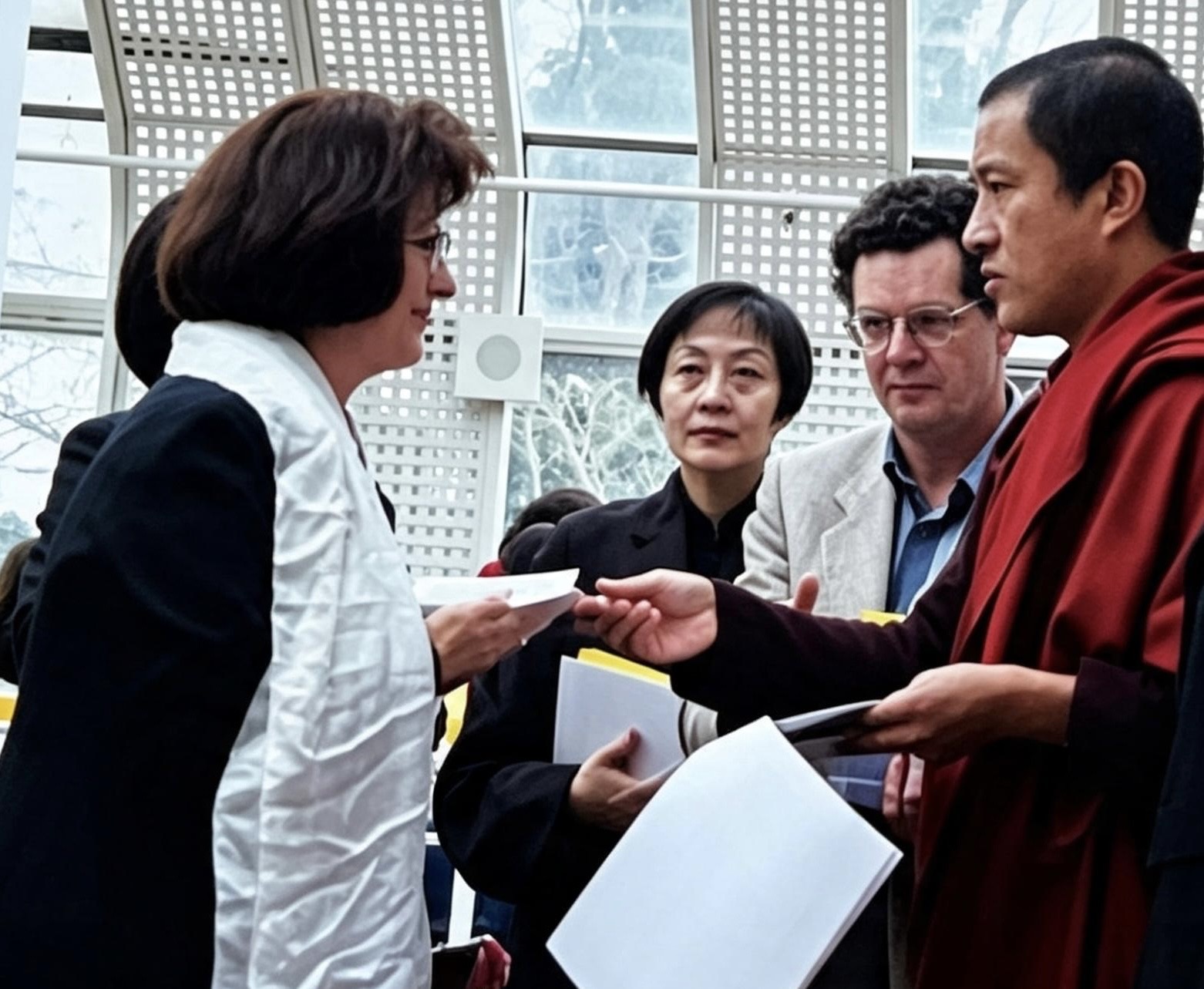
Margret Sablatnig shares how she developed the KF database, a role she held for some 20 years.
On December 26, 2025, Dzongsar Khyentse Rinpoche gave his annual address to Khyentse Foundation’s Board of Directors. On this occasion, Rinpoche emphasized the significance of Buddhist education for children and the emerging role of artificial intelligence, and stressed the need to always give weight to dedication, devotion, and a good heart in serving KF and his other organizations.
As Khyentse Foundation enters its 25th year, we take Rinpoche’s words to heart in pursuing our mission to preserve and promote the Buddhadharma. Here is Rinpoche’s full address.
On December 26, 2025, Dzongsar Khyentse Rinpoche gave his annual address to Khyentse Foundation’s Board of Directors. On this occasion, Rinpoche emphasized the significance of Buddhist education for children and the emerging role of artificial intelligence, and stressed the need to always give weight to dedication, devotion, and a good heart in serving KF and his other organizations.
As Khyentse Foundation enters its 25th year, we take Rinpoche’s words to heart in pursuing our mission to preserve and promote the Buddhadharma. Here is Rinpoche’s full address.
“I have nothing long to say because our vision and mission are basically very similar, I mean, they haven’t changed, so there’s not much reason to talk long-winded stuff. I guess it’s maybe more for myself, so that I will not get too distracted with other angles.
I think we need to remember our vision and our mission, and I believe that this kind of meeting always … well at least for myself, it helps me to align and focus. So, thank you for coming, and not only for coming to this meeting, but thank you for continuously dedicating your time and energy, as Dolpopa Sherab Gyaltsen said; thank you for also always keeping Khyentse Foundation in your concern and in your agenda.
Having said this, and I think we talked a little bit about this in our previous gathering, on top of all the other Khyentse Foundation commitments or missions or projects we are very much getting involved with Buddhist education, especially for children. I think we need to think about the next generation of Buddhists; this is something that we have no choice but to think about and plan for. The more I go into Buddhist children’s education, or some sort of plan for the next generation, I get very inspired, but sometimes I also get confused and torn, like, I don’t know what to do, how to face the challenges, the right direction. It’s almost like we have to gamble a lot with this Buddhist education for children thing. The existing projects have already demonstrated very satisfying results, I would say—the New York one, the Singapore one, and even the smaller ones like the one in Vancouver. They have encouraged us a lot. But this is something ever changing because the situation of the world keeps on changing. I mean, sometimes people even say that there are no more children being produced in the world, so maybe there’s no need to really think about Buddhist children’s education. It seems to be true; in places like Taiwan I heard that they are suffering a lot with so many schools, like high schools, getting closed and all of that. But I personally think so far, we are doing well. It is very encouraging and I think we should continue doing that, but we have to just keep in mind that with children’s education we need to gamble a little bit.
Then, the next one, an even bigger gamble, and something that was a bit of a surprise for me also, this whole AI thing, because I actually don’t even know what it is. Maybe small things I know from very mediocre information about AI. But it looks like AI can do a lot and is already doing a lot—already it is pulling the rug out from under some of the most powerful countries’ situation. But then some people say it’s all going to burst. This is totally unknown territory for me, but it looks like it is something that we have to get involved with. We at least need to know how to exist in this AI world. A lot of people are looking at Khyentse Foundation and at me, asking what are we planning? It started with the idea of AI translation. Things get translated within a few moments—what are we going to do about that? That’s how I got introduced to this AI world. But now it’s not only translation. AI can edit, AI can create a different version, AI can be involved in the context of literature, now AI can produce images, create sound, create film. And, after 10 years, it looks like AI is going to be a big, big part of our so-called living, much more than like coffee or tea. It is going to be just part of us.
I don’t know how many other lamas—not just lamas actually, Buddhist masters in China, in Thailand, in Sri Lanka—I don’t know how many of these Buddhist institutes, masters, and Buddhist stakeholders, what are they doing? This is something I think we should know. But among the Tibetans, the Tibetan lineage, Tibetan Buddhism, apart from a few rinpoches, I have not really noticed active involvement, or some sort of plan, or at least some sort of conversation about what we are going to do about this. That does not seem to exist within the Tibetan tradition. But as I said, it seems to be something inevitable. This AI thing looks like it is really, really big. At every level. It is crucial, but at times it also looks to be very dangerous. So, today, if you ask me about my vision and mission regarding AI and Buddhism or AI and dharma, because I have no knowledge of AI I really don’t know how to answer. It’s a little bit like the situation with Buddhist education, although AI is much more challenging. At least with education we somehow know what to teach the kids, a little bit, but with AI, I don’t know what it is so I don’t have a proper answer. The only thing, as I am repeating here, is we have no choice, we need to do it. So, this is something that I want to tell all of you, that this is what we need to do. We almost have no choice, unless somebody takes this on, and then we will be very happy to pass it to this organization or person. This is something I wanted to share.
Then, on top of that, maybe it’s something very trivial, but there has been some conversation about the way Khyentse Foundation is run, and actually how most of my organizations are run. Now that Khyentse Foundation is sort of becoming known and established and there are a lot of activities, and a lot of our activities are also kind of on a big scale, like 84000, involvement with universities, and now with AI, there is conversation about how we should be putting some effort into becoming professional and doing things professionally, even though I really don’t know sometimes what that means. But one thing I wanted to just remind all of you about is that we should really not forget that generally, the whole strength of all my organizations—especially 84000, Siddhartha’s Intent, and very true with Khyentse Foundation—is that they are conceived with a lot of devotion, a lot of volunteering, and a lot of good heart. They may not necessarily be what people call professional, but there’s a lot of heart in them. And I feel that that is so, so valuable. I understand that if you want to expand your activity you will have to be more professional, but I think that element of dedication, devotion, all working for the dharma is like the heart and lung and blood of our organization. And this is something we don’t want to override; we need to think that this is important. I understand that because there’s a lot of good heart, a lot of dedication, but it’s not very professional, or not really how it should be done according to this or that organization or corporation, it may sometimes create unnecessary confusion and exhaustion of energy. But I think we should always give weight to the good heart; I would say the importance should be given to this. This is a small thing that I wanted to share.
Other than that, thank you for coming, again, and thank you for continuously supporting the organization.”
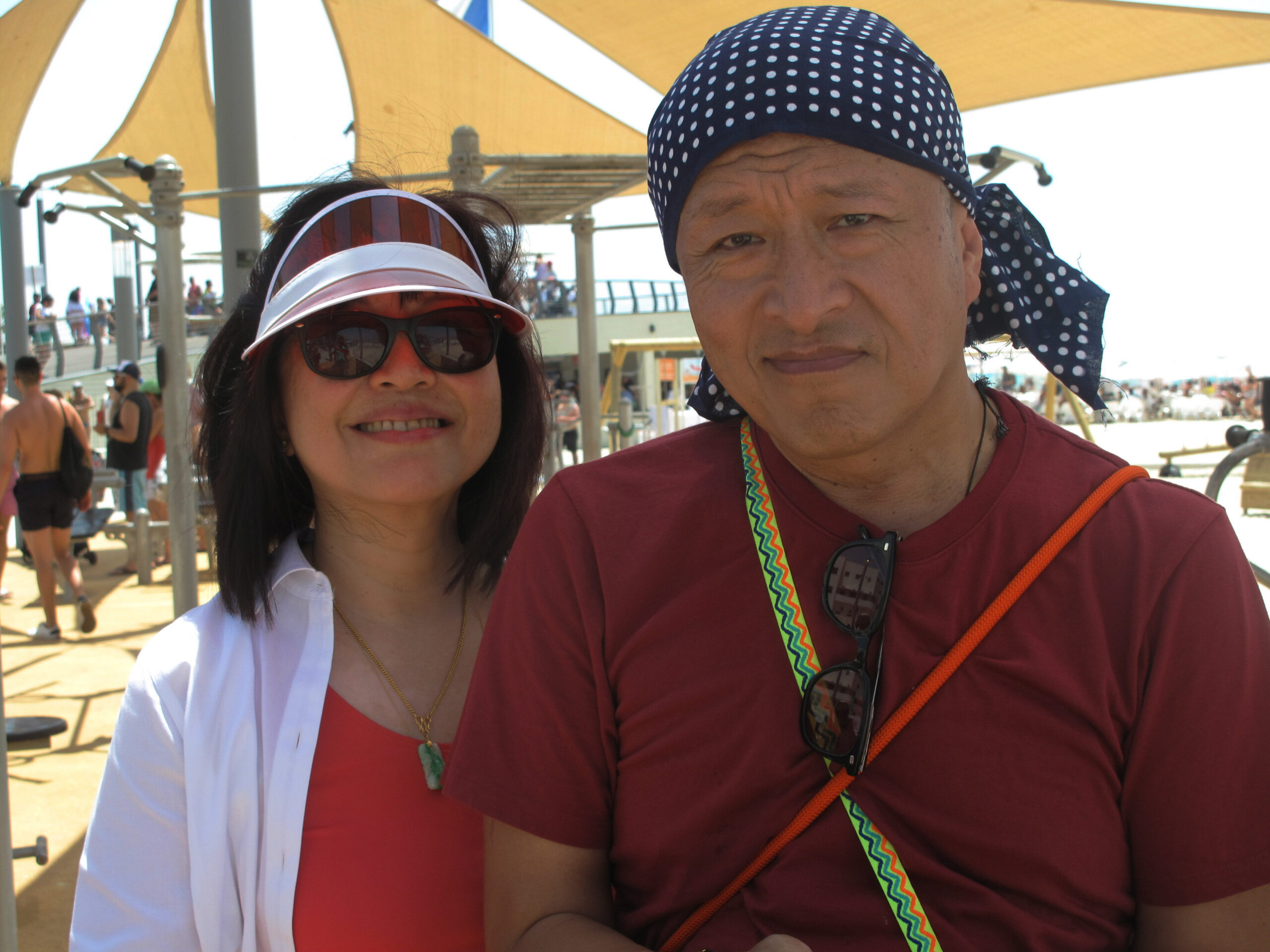
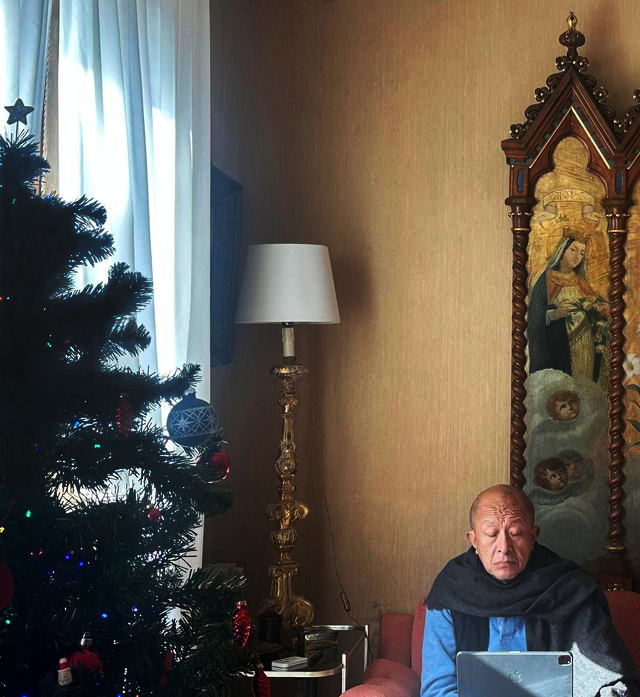
Featured image above: Rinpoche in Europe, December 2025.