Jamyang Khyentse Wangpo
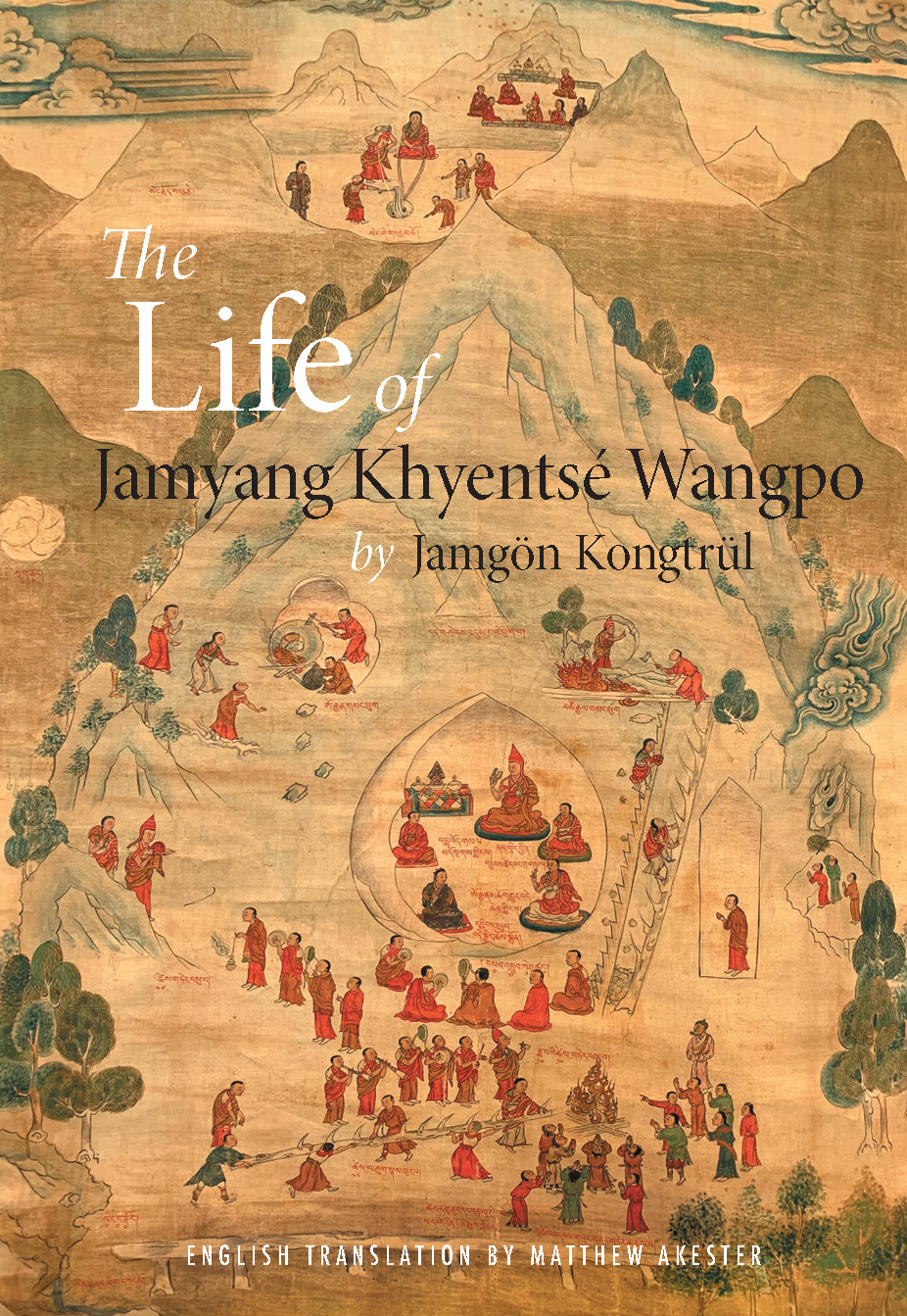
Khyentse Foundation is honored to offer for free download the redesigned e-book The Life of Jamyang Khyentsé Wangpo by Jamgön Kongtrül Lodrö Tayé, translated into English by Matthew Akester.
In the foreword, Dzongsar Khyentse Rinpoche writes:
Many of us need much more than books and teachings, no matter how profound they are. We need to have the example of an actual person who truly embodies these books and teachings in all they do – even if that person is someone from the past.
It’s like an engineer whose own life and work are inspired by knowing about the pioneers who created the first airplane, designed the Panama Canal, or sent the first man to the moon.
Likewise, for those of us who have had a little glimpse of emptiness, compassion, and the wisdom of the Buddha, it is inspiring to learn what the great masters of the past have done and how they spent their time and energy. And among these masters, Jamyang Khyentse Wangpo shines like the Morning Star.
And who better to record the life of Jamyang Khyentse Wangpo than one who was both the great master’s disciple and also his guru – a truly remarkable relationship that already tells us something special.
For all these reasons and more, Matthew Akester’s translation of Jamgon Kongtrül’s The Life of Jamyang Khyentsé Wangpo … must really be treasured.
For those of us who have had a little glimpse of emptiness, compassion, and the wisdom of the Buddha, it is inspiring to learn what the great masters of the past have done and how they spent their time and energy. And among these masters, Jamyang Khyentse Wangpo shines like the Morning Star.
Dzongsar Khyentse Rinpoche
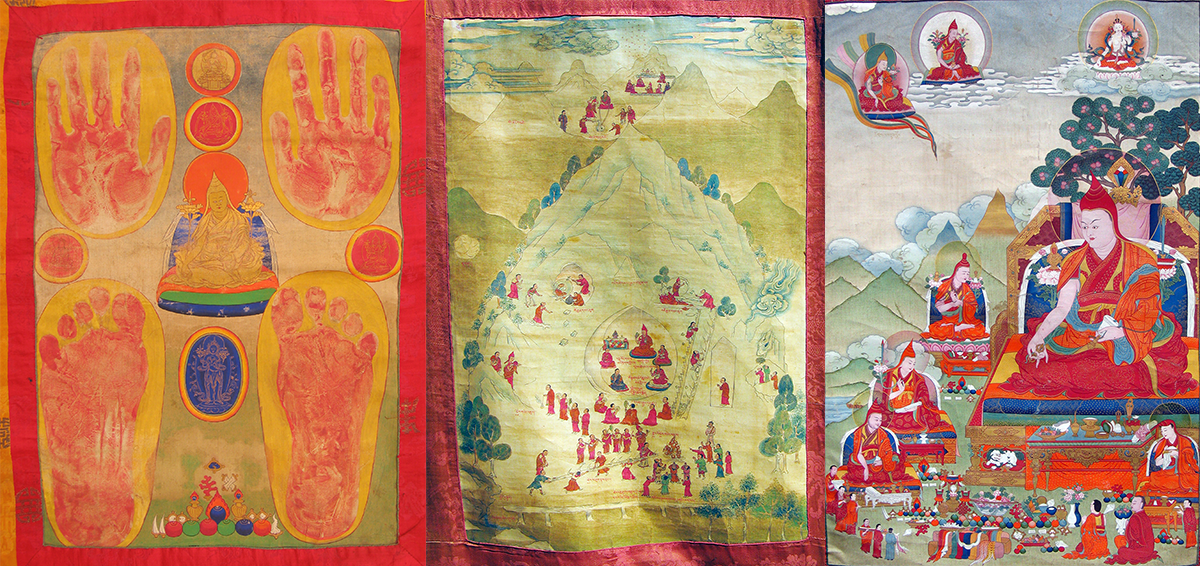
“Jamyang Khyentse Wangpo, Kunga Tenpe Gyaltsen, otherwise known as Pema Osel Dongak Lingpa, is the supreme example of someone who truly lived the Buddha’s teachings, and one of his many remarkable and admirable qualities was his endurance. Throughout his life he sought out more than one hundred and thirteen gurus, requested teachings from them and then, rather than just consigning those teachings and practice methods to notebooks, actually practiced and realized them. Even then he wasn’t satisfied, because he went on to gather and publish these teachings and ensured the continuation of the lineages by passing them on to many of his most trusted disciples, like Jamgön Kongtrül, Mipham Rinpoche, and Jamgon Loter Wangpo.
The purpose behind all this indefatigable activity wasn’t to win himself fame or wealth, but rather it was a response to a deep and overriding anxiety about the future of the dharma, which, during his life, was in decline in Tibet. To that end, he would seek out the holders of rare lineages, and if, for example, they happened to be illiterate, he would teach them how to read, so that he could receive the teachings and empowerments from them and ensure that no lineages would be lost. Many of the teachings of the four schools of Tibetan Buddhism are only available to us today thanks to his tireless pursuit of endangered lineages.
On top of that, when he was asked which school he belonged to, he would insist on saying, ‘I’m a follower of Shakyamuni Buddha!’—rather than a Nyingma, or a Kagyupa, or a Sakya, or a Gelugpa—to emphasize his commitment to the spirit of Rimé, which even today is considered to be quite a radical movement that encourages nonsectarianism. In the context of Tibetan history, for him to maintain such an attitude was almost inconceivable.
Actually, to describe this text as a ‘biography’ is in itself a gross understatement, as it contains the complete path of all the yanas. With a little effort, as we listen to its words, we might even be able to realize the true meaning of its title, ‘rnam thar,’ which means ‘Liberation Upon Hearing.’ In any case, my hope is that at the very least some of those who read or hear this text will make a connection with Lord Manjushri himself.”
— Dzongsar Khyentse Rinpoche
16 June 2008
In a recent interview, Matthew Akester shared some insightful stories about his connection with Jamyang Khyentse Wangpo and with this book.
KF: What led you to translate the biography?
MA: I am basically a historian rather than a Buddhologist. My interest in Khyentse Wangpo began with another book project, also supported by KF, the detailed study of his pilgrims’ guidebook to central Tibet. In the years I spent researching that short book, I made use of the biography in piecing together his travels and experiences in central Tibet in the 1840s and gained some familiarity with it. When I heard that Dzongsar Khyentse Rinpoche was encouraging an English translation, and apparently no one else was poised to do a better job, I gulped, and decided to have a go.
There is an assumption among Buddhist practitioners that the value of this work, and the biographies of spiritual masters generally, is to inspire the reader on the path.
KF: In that case, how should we recommend this book to the casual reader in search of inspiration?
MA: I would say the casual reader could skip some of the laborious lists (of previous incarnations, teachings received, donations, etc.) in the “outer” life but might enjoy parts of the fifth and sixth chapters, where Kongtrül gives us a moving portrait of the master and his outlook. A lot of 19th-century Tibetan biographical literature tends to be formalistic hagiography, not very readable, but in these passages Kongtrül shows that as well as being a supremely learned yogi and saint, his teacher was also a Khampa man who often spoke directly, even coarsely, and had tempers and impulses not usually associated with sainthood.
Most of all, the “inner” and “secret” lives provide a fascinating account of the mystic and visionary odyssey behind the compilation of the Rimé canon, bringing to life Khyentse’s extraordinary and intimate interactions with the great masters of the past.
Khyentse Foundation supported the publication of Akester’s English translation of Jamyang Khyentse Wangpo’s book Guide to Central Tibet (Serindia Publications, 2016).