Celebrating Cangioli Che, KF’s First and Forever Volunteer
Khyentse Foundation’s first board meeting took place in the parlour of Cangioli Che’s Pacific Heights home in San Francisco in late 2001. It was there that Dzongsar Khyentse Rinpoche laid out the bones of what would become the foundation’s first five areas of focus. Cangioli humbly and diligently set about creating a sound infrastructure for Rinpoche’s vision to manifest, with a number of his students having made pledges of support following a visit to Dzongsar Monastery in Derge in June 2001. Under Cangioli’s leadership KF went on to become a global changemaker, with more than US$50 million paid out in grants and US$100 million received in donations over the years. The foundation operated out of Cangioli’s homes for more than 2 decades until she finally handed the reins to Lynn Hoberg at the end of 2023.
The foundation’s establishment in 2001 coincided with a time of personal obstacles in Cangioli’s life, and she was eager to pour her energy into something meaningful. “I had operated my own business for many years in Hong Kong, but when I moved to the US in 1988 I became a full-time mom and corporate wife. I’d actually been looking for something to do with my free time, something that could benefit people.”
Timing also came into play in her departure from the executive director role as she welcomed a new granddaughter into her life and was ready to embark on her next chapter as a grandmother and practitioner.
In between these milestones, Cangioli quietly and adeptly helped make history. KF celebrates Cangioli and all that she has accomplished.
Khyentse Foundation’s first board meeting took place in the parlour of Cangioli Che’s Pacific Heights home in San Francisco in late 2001. It was there that Dzongsar Khyentse Rinpoche laid out the bones of what would become the foundation’s first five areas of focus. Cangioli humbly and diligently set about creating a sound infrastructure for Rinpoche’s vision to manifest, with a number of his students having made pledges of support following a visit to Dzongsar Monastery in Derge in June 2001. Under Cangioli’s leadership KF went on to become a global changemaker, with more than US$50 million paid out in grants and US$100 million received in donations over the years. The foundation operated out of Cangioli’s homes for more than 2 decades until she finally handed the reins to Lynn Hoberg at the end of 2023.
The foundation’s establishment in 2001 coincided with a time of personal obstacles in Cangioli’s life, and she was eager to pour her energy into something meaningful. “I had operated my own business for many years in Hong Kong, but when I moved to the US in 1988 I became a full-time mom and corporate wife. I’d actually been looking for something to do with my free time, something that could benefit people.”
Timing also came into play in her departure from the executive director role as she welcomed a new granddaughter into her life and was ready to embark on her next chapter as a grandmother and practitioner.
In between these milestones, Cangioli quietly and adeptly helped make history. KF celebrates Cangioli and all that she has accomplished.
Following a Visionary Teacher
Cangioli first met Rinpoche in the early 1990s through her sister-in-law Amelia Chow in Vancouver and was immediately inspired to offer her support. She began as treasurer at Siddhartha’s Intent and helped organize Rinpoche’s teachings in the Bay Area, working with then chair Helen Jackson Jones. Through that work, she became aware of Rinpoche’s hefty financial responsibilities. She noticed how he sent the offerings from his teachings to his monasteries and institutes in China, India, and Bhutan.
“The monasteries needed so much support, and I began to realize what a heavy financial commitment that was,” she says. When she began to dig deeper, she found that Rinpoche was responsible for the basic needs of more than 1,000 monks at the time. While local villagers made generous offerings, there was always a gap. And the gap increased as the number of dependents grew. Soon, the monks at Dzongsar Institute in Bir in India would be moving to the new, much larger shedra (monastic college) that Khenpo Kunga Wangchuk was building nearby in Chauntra. The capacity of that institute alone was increasing from 200 monks to 700.
“A group of us decided to calculate exactly how many monks Rinpoche needed to support and how much it would cost to cover their basic needs,” says Cangioli. “We then approached Rinpoche with a proposal—an endowment. We wanted him to have absolute freedom to do whatever he wanted without this burden. That’s what prompted us to start the foundation.” They decided to start with the new institute in Chauntra, and figured that the interest from a US$2.8 million endowment (at 5% interest) in 2001 would be enough to support the 700 monks. Later, the support extended to Rinpoche’s other institutes and monasteries, as well as to other projects—many more than they could possibly have imagined at the time.
They asked Rinpoche to dream big—if money was no object, what did he envision? And he did dream big! Text preservation and translation projects, support for non-Tibetan monastics and laypeople, a chair at a US university, schools for children. The group took notes. “Rinpoche is very inspiring as a leader. He has such a vast vision, and he looks to us to know how to achieve his aspirations,” says Cangioli. “We really needed to find the pathways and uncover any issues, and my professional organization experience was useful in that respect.”
From Shanghai to Hong Kong to San Francisco
Cangioli was born in Shanghai and moved to Hong Kong with her family as a child. There, she went to a Catholic school run by Italian nuns. “I loved my school, I loved the nuns and teachers, and I wanted to become a nun! I loved Friday Mass and the Virgin Mary, the beautiful ceremonies. But for some reason, every time I was about to be baptized, at the last minute I chickened out.”
She went on to the University of Hong Kong, where she studied literature and was taught “all the wrong things,” like love is absolute and permanent, and romance is the goal. She was on track to become a professor of literature but realized she didn’t belong in an “ivory tower.” A few years exploring careers in government and PR left her independent, entrepreneurial spirit unsatisfied, so with a friend she started a business organizing conferences and exhibitions in Hong Kong and the Asia-Pacific region. “We did quite well for many years and it was a lot of fun,” she shares. “It was a very exciting business.”
But the winds of karma changed, and Cangioli moved to the US with her husband and their 4-year-old son and she became a housewife. She knew she wanted to do more. “It was before I really became a Buddhist. I wanted to do something that would benefit people, and there are so many options for charity work. I was even thinking of fundraising for cancer research, or maybe youth development. So I took a course in nonprofit management at a UC extension program.”
Cangioli’s professional experience and training were certainly contributing factors in her success as Khyentse Foundation’s executive director. But her attitude to the role was perhaps equally significant.
Work as Practice
As Cangioli passes the baton and reflects on her experience, she realizes how much she has learned, and in particular, the importance of taking work as practice.
The Three Supreme Methods became the guiding light for everything she did. “We really need to take the Three Supremes into our work. This means, be clear about your intention to benefit all beings. Do your best, but realize this is only your perspective. And finally, dedicate the merit without being attached to whether the goal is achieved. This requires great balance.
“A couple of times, grantees didn’t use their funds exactly as stated on their application and I expressed my disappointment to Rinpoche. His response surprised me: ‘Oh, that’s fine. A connection has been made between this guy and us and our wish.’ I learned so much from that.”
She also found herself wanting to see more parity between contributions from the East and the West, especially since so much KF support flowed from the East toward Western projects. But Rinpoche helped her realize that things are not so linear. “‘Maybe after one or two hundred years, when Buddhism is more established in the West, Westerners will help Asians,’ he said. This really affected me! It makes me see things in a much bigger, much more spacious way.
“Ultimately, there’s no giver, no act of giving, and no receiver,” she continues. “There’s no feeling that we are doing the grantees a favor. In fact, they are doing us a favor by devoting their time to the dharma. We are one condition so that they can do what they want to do for the dharma. What we are doing is really different from a corporate venture. We cannot bring worldly, normal logic into it.”
Her advice to Lynn is to have courage. “Sometimes you have to make a decision that you think is correct, and that to your best knowledge is correct,” she says. “But you still have to risk sometimes making decisions that won’t please everybody, because you can’t.”
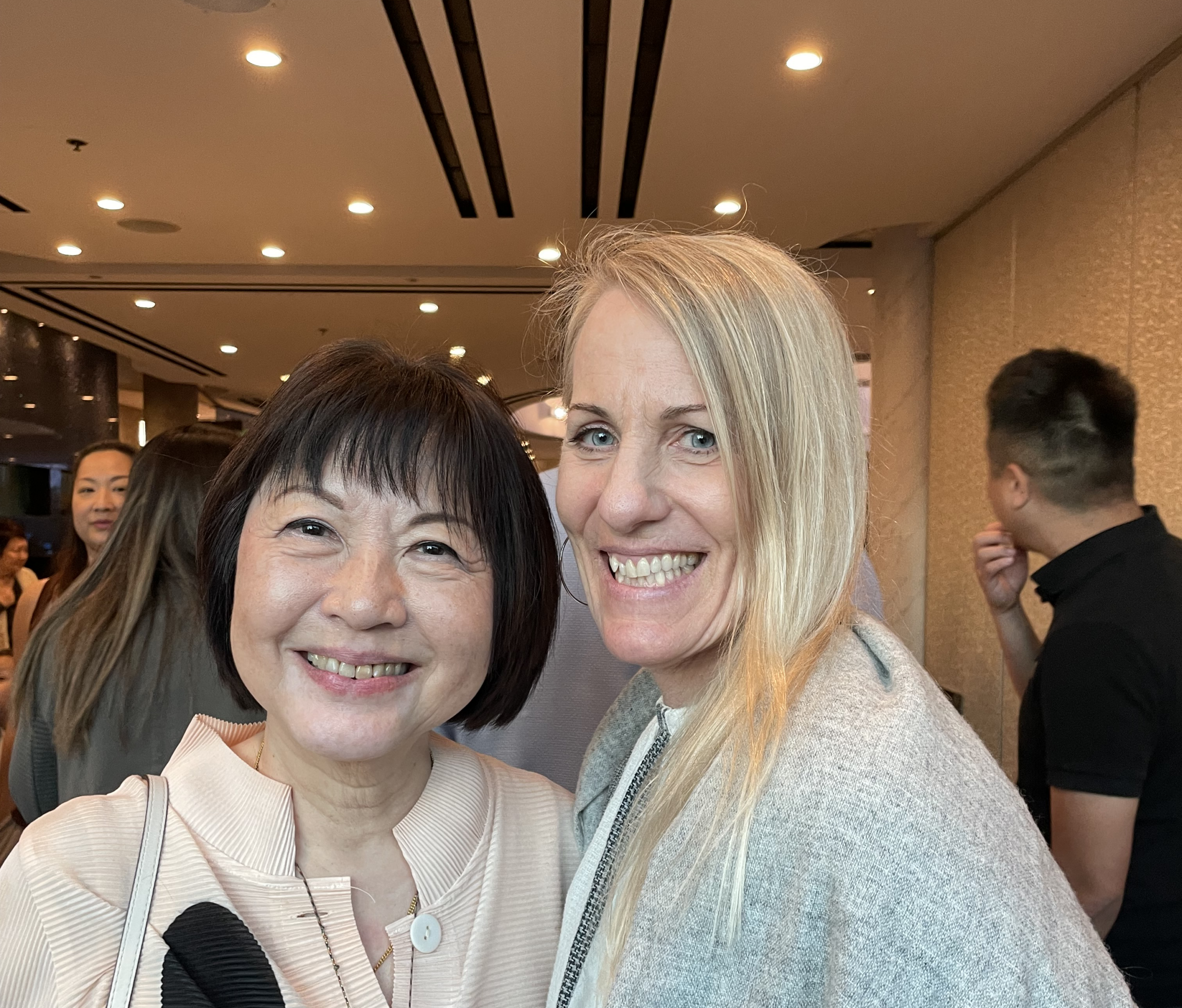
Highlights over the Years
When asked about personal highlights from her 20+ years as KF’s leader, Cangioli doesn’t hesitate. “I think what we have done in academia is really making a lasting impact on the study of Buddhism. We now have seven endowed chairs at major universities. I know nothing is permanent, but as far as we can see, we have established something very long term at those universities. And we can see some of the results. Berkeley is now probably one of the best Buddhist studies centers in America, and probably in the world.
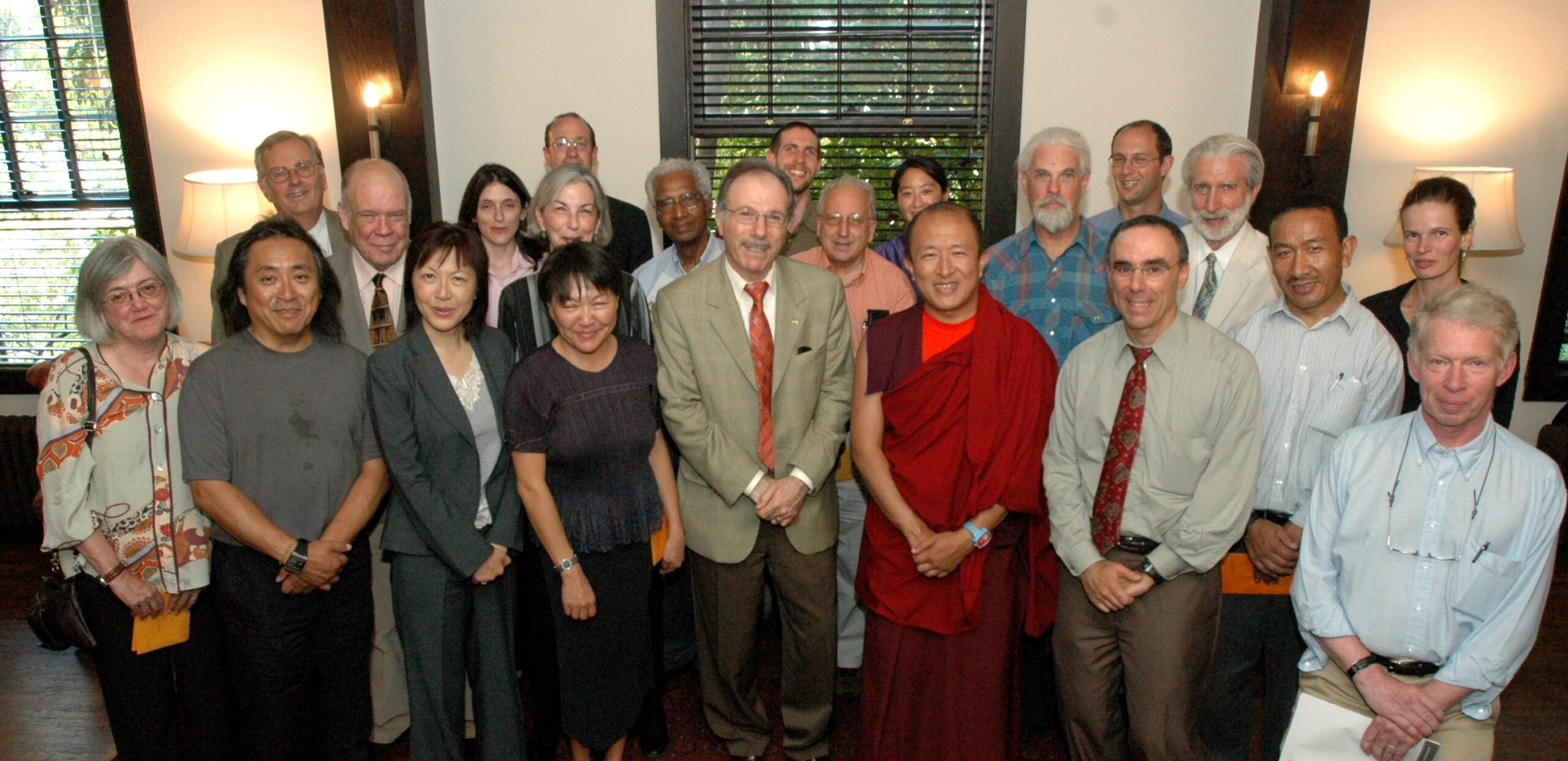
“I remember that at the party Berkeley hosted to celebrate the inauguration of the Khyentse chair, we were opening champagne and Rinpoche was asked to say a few words. He said, ‘Oh, I’m really happy that this is happening. I feel with this one contribution, we’ve started the equivalent of 100 monasteries.’ I was so happy that I could check this off my list. And then he said, ‘But we really should do more of this. Not just one chair, we should do at least one in every continent, if not in every country.’ And I realized we had only just begun.”
Her interactions with great thinkers such as E. Gene Smith, founder of the Tibetan Buddhist Resource Center (now the Buddhist Digital Resource Center), and Peter Skilling, whose text preservation effort led to the creation of the Fragile Palm Leaves Foundation, are especially memorable. “It is such an honor for Khyentse Foundation to support their work,” she says. She also loved meeting artist Milton Glaser, who designed the logo for 84000: Translating the Words of the Buddha.
“I hope that whatever I’ve done in the years with the foundation has helped make some things happen,” says Cangioli. And indeed, it has.
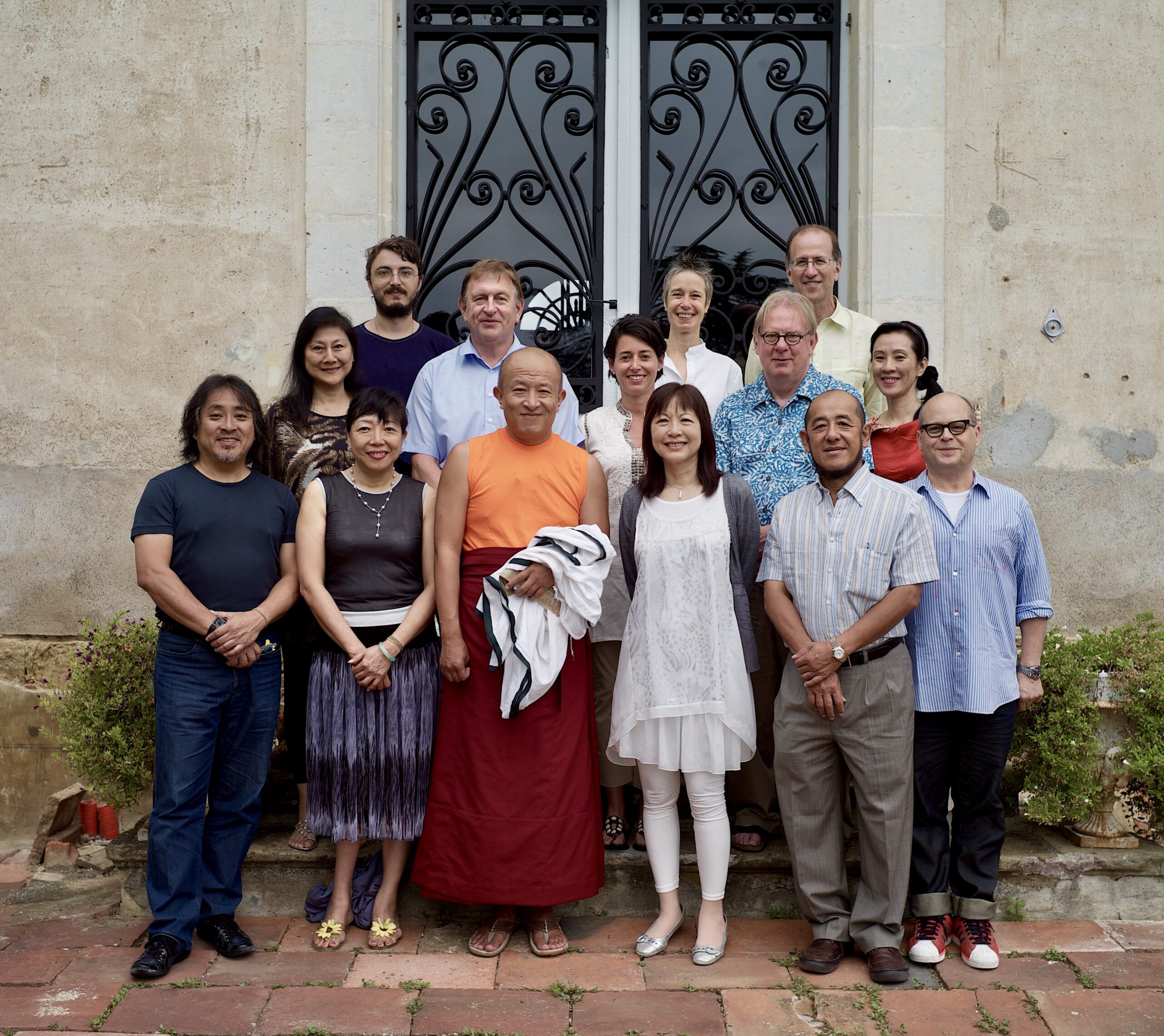
Although retired as executive director, Cangioli continues to serve as a KF advisor and forever volunteer.
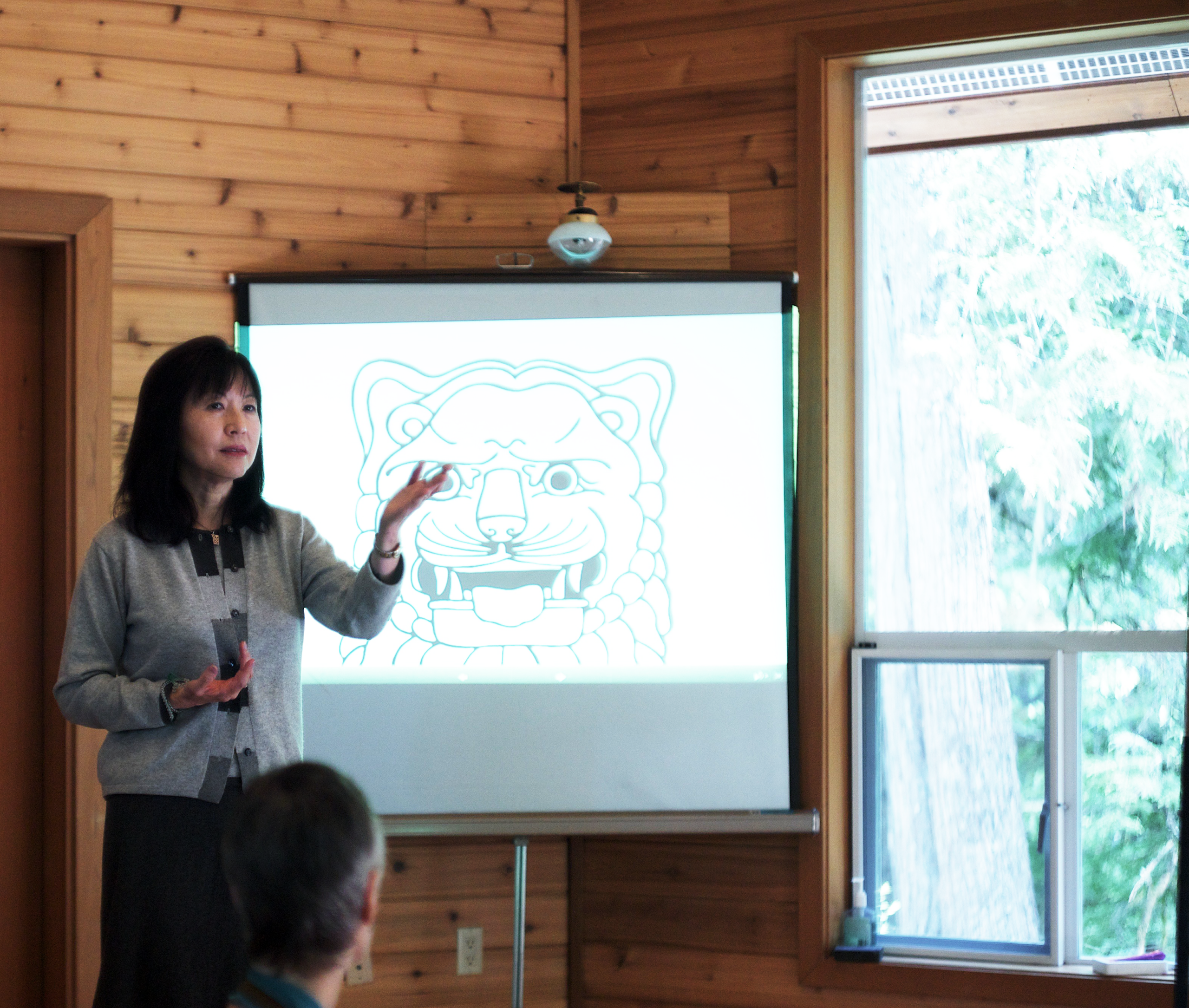
Featured image above: Cangioli giving a presentation at the board and strategic planning meeting held at Sea to Sky Retreat Centre in Canada, June 2013.
All photos courtesy Cangioli Che.