The DJK Chinese Translation Project Launches Its Website
Unlocking the Treasure Trove of the Precious Khyentse Lineage Teachings
The DJK Chinese Translation (DJKCT; 欽哲漢譯) project is dedicated to translating the key works of the Khyentse lineage masters from Tibetan into Chinese, with the goal of serving Chinese-speaking dharma practitioners and students of Buddhism. Under Dzongsar Khyentse Rinpoche’s guidance, the project was initiated by Khyentse Foundation in 2023 and is fully supported by the foundation.
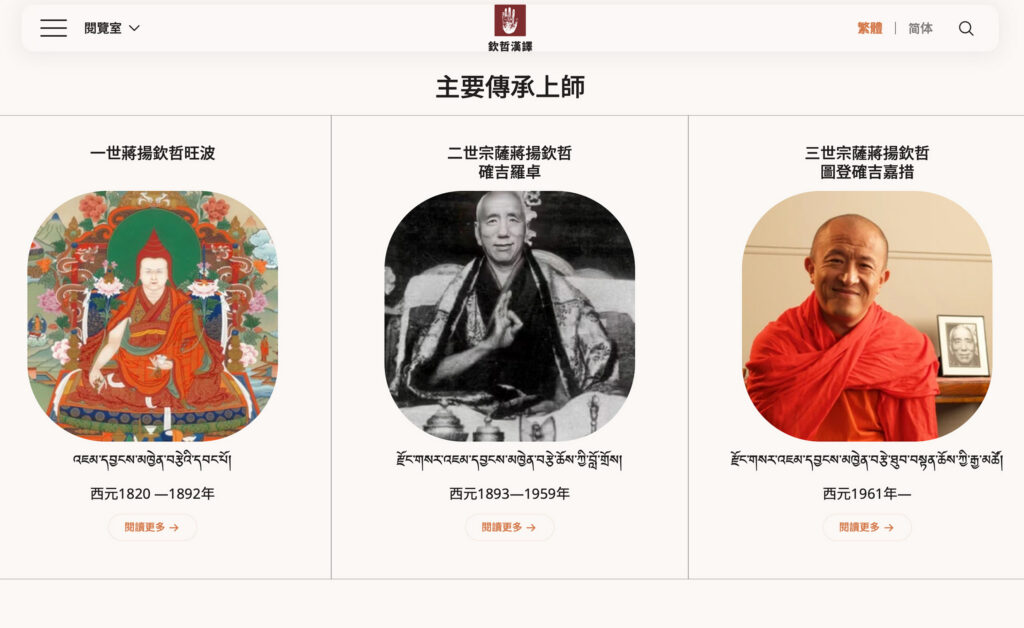
Since its inception, DJKCT has focused on providing practice texts in Chinese for Rinpoche’s students, which have been available mainly through Siddhartha’s Intent. Now, with the official launch of its website, the project will use this platform to gradually offer reliable Chinese translations of a variety of works by the three main Khyentse lineage masters—Jamyang Khyentse Wangpo (1820–92), Jamyang Khyentse Chökyi Lodrö (1893–1959), and the present incarnation, Dzongsar Khyentse Rinpoche—to a wider range of Buddhist practitioners and students.
Approaching the Khyentse Lineage Teachings
For anyone studying the Buddhadharma, it can be a challenge to find reliable materials. This is especially true when becoming interested in a particular master or type of teaching, or when a question arises; it can be difficult to know where to begin. DJKCT’s new, ever-expanding reading room offers a useful resource for Chinese speakers interested in the works of the Khyentse lineage masters, providing a continuous online space for reading, research, and exploration.
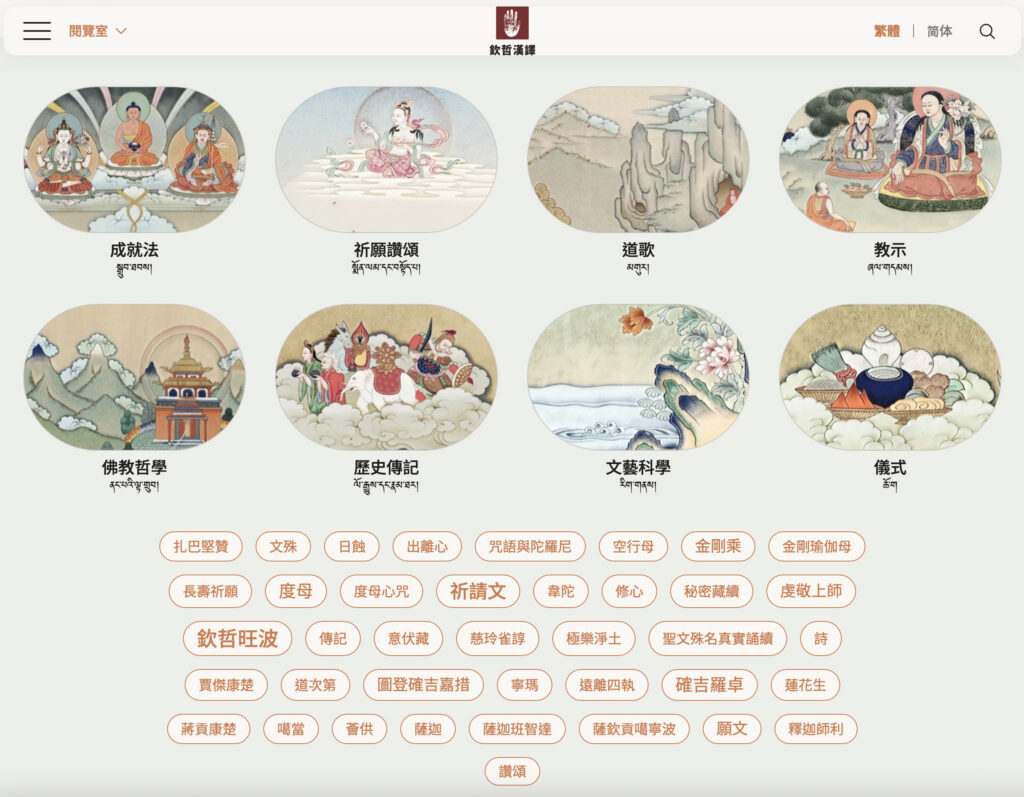
DJKCT translates the teachings and writings of the three main Khyentse lineage masters on an ongoing basis. The project is in the early stages and the translations will be gradually added to the reading room when ready, classified by author, category, and keywords.
The reading room’s content is primarily arranged according to the three masters, and readers can search by author to directly browse the translated works of a specific master. One can also browse according to eight categories—prayers and praises, songs of realization, teachings, Buddhist philosophy, historical biographies, sadhana practices, art and science, and rituals—gaining insights into these texts from different perspectives. Readers can also select keywords, for example “Tara,” “mind training,” or “devotion to the guru,” to explore the content further.
May DJKCT’s reading room become a place for all Chinese speakers to connect with the Khyentse lineage teachings!
Featured image: The DJK Chinese Translation project’s logo, featuring Jamyang Khyentse Wangpo’s left handprint.