Three New
Spotlight Video Downloads
Khyentse Foundation Distinguished Professorship at
Berkeley
Spotlight videos feature
in depth information
about the various Khyentse Foundation activities. To watch these and other spotlight videos,
visit the Khyentse Foundation
Restructuring of the Benefits
Gallery
The Khyentse Foundation Benefits
Gallery is an online store from which all profits go to support the
Foundation's activities. Over the next few
months, the site will undergo some changes, primarily a reduction in
inventory. We will continue to sell items that relate to the
study
and practice of Buddhism but will discontinue offering services, art,
jewelry accessories and other items. Please visit the site to
take
advantage of
discounted items before they are removed. Many thanks to all
those who donated items over the years and especially to volunteer
Helen Jones for
her hard work in managing the gallery and handling all of
the
orders.
Some Sales Items:
Travellers & Magicians book
Was: $28, now $15
Hand-stitched purses
Were:$12 to $26, now $10 to $24
On the Path book
Was $40, now $15
Matching Funds Math
Monthly donations from the
Khyentse Foundation
Matching Funds Program account for 66% of the funds needed to fill the
gap between income generated by investments (calculated at 5%) and
projected
spending.
Facts at a Glance:
Projected expenses for 2007-2008: $941,000
Estimated investment income (at 5%): $290,000
Amount received from monthly donors: $216,000
Amount matched by matching fund donors:
$216,000
Amount to be raised:
$219,000
If this amount is raised through recurring monthly donations, thanks to our matching donors, we only need to
raise half as much: $109,500 annually ($9,125 per month).
So how do we do this?
Here's one possible scenario for raising that $9,125 per month; obviously, there are many such
scenarios:
1 donor at $1000/month
3 donors at $500/month
5 donors $200/month
20 donors at $100/month
10 donors at $75/month
25 donors at $50/month
45 donors at $25/month
50 donors at $10/month
As you can see, every donation is important, no matter its size.
Our deepest thanks go to all of the matching fund participants who have
made this program such a success. We welcome new donors to join at any
level.
To participate, you can do any of the following:
for more information.
Who We Are
Khyentse Foundation is a collaborative effort of students, friends,
volunteers and sponsors around the world. We are engaged in an
international campaign to provide the necessary resources, capital,
manpower and knowledge to fund or seed a number of priority projects
envisioned by Khyentse Rinpoche to support the community of dharma
students and practitioners worldwide.
In order to achieve its goals, Khyentse Foundation relies on the sound
professional advise of an investment committee appointed by Khyentse
Rinpoche comprised of financial professionals with experience of
investment and portfolio management. Please read complete bios on the KF Team or contact them directly from the links on the Who We Are
page of the web site. In addition, the downloadable Mandala Chart outlines the the activities of the various organizations lead by
Dzongsar Khyentse Rinpoche.
Thank you for reading.
|
|
|
In This
Issue:
Patron King Series Part
VIII:
Prince
Shotoku
When Prince Shotoku was born, the civilization of Japan was not much more than a riverbank
populated by barbarian hordes. By the time he died, though, Buddhism was the state religion, and the Golden Age had begun.
KF Five Project Update:
Education Programs
Find out what's new with our friends down under. The Siddhartha
School has created a new partnership with the Shambhala School in Nova
Scotia.
Board of Directors in
Vancouver
Read about the August, 2007 meeting of the board of directors and watch the slide show.
Restructuring the Benefits
Gallery
Some items are going on sale as we downsize the operation.
Three New Spotlight Videos
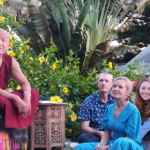
Learn about how Khyentse Foundation is making a difference in Cambodia, India and the United
States.
"Milarepa said that the practitioner and the patron will face Buddhahood together."
-
Professor Samdhong Rinpoche
Why Read about Prince Shotoku?
In 2002, Dzongsar Khyentse Rinpoche began identifying some of the great
patrons of Buddhism, from Shakyamuni's own patron, Sudatta
Anathapindika to the warlord king Ashoka. Without these patrons,
Buddhism would have had little chance to flourish. Frequently in the Khyentse
Foundation Communiqué, Rinpoche shares the life story of one of these
inspiring patrons. All of these stories are now available on our web site under
Words from Dzongsar Khyentse Rinpoche
|
Prince Shotoku at Age Two. Japanese,
Kamakura period, c. 1292. Japanese cypress wood with polychromy and
rock-crystal inlaid eyes; assembled wood-block construction.
( Arthur M. Sackler Museum)
Matching Funds
Math
We did the numbers and our findings are very encouraging. If
about 160 more
people join the program starting at
levels as low as $10, the Foundation's projects will be funded for the next year. Full details below.
|
|
KF Five Project Update:
Education
Programs
The Siddhartha School Creates New Partnerships
In July, 2007, as part of
the continuing development of The Siddhartha School (TSS), a Buddhist
primary school in Lismore, Australia, the TSS team
hosted Jackie Mitchell, a teacher in the elementary school and
cofounder of the Shambhala School in Nova Scotia. Through the
sponsorship of Khyentse
Foundation, Jackie led a three-day curriculum workshop attended by TSS
curriculum coordinator Phil Davis, teachers, and board members. She
also met
with Rinpoche to discuss and clarify the relationship between the
Shambhala School and The Siddhartha School. TSS aims to open its doors
in 2009, and
the meeting with Jackie Mitchell will help to ensure that the school's
curriculum is ready for submission to the Australian NSW Board of
Studies for
approval before that time.
The Shambhala School in Nova Scotia was founded in 1994 by parents in
the Shambhala sangha who wanted their children's educational experience
to
reflect their values as Buddhist practitioners. The approach to
curriculum is based on meeting the needs of the child, not just
academically, but
socially, emotionally, physically, and spiritually. The school fosters
an environment where compassion and curiosity go hand in hand, and
where each
child is recognized for his or her unique capabilities while learning
to work with others in the community. At the elementary level,
the arts
are integrated into the curriculum in all subjects and a thematic
approach, based on cultures from around the world, gives the students
an expansive
world view and an appreciation of the wisdom that unites all cultures
in their diverse forms.
More information about the Shambhala School can be found on their web site at www.shambhalaschool.org.
Team leader and Program Director Eva Thomas says that TSS's experience
with Jackie Mitchell "has been a huge help in bringing the school to
the next
level of formulating policies, building plans, and setting out the
educational philosophy of the school." Jackie has offered her ongoing
support,
primarily in the area of curriculum development, and the team hopes to
send its future teachers to the Shambhala School for further training
in
2008.
In addition, the team was approached this year by Southern Cross
University, in Lismore, to find ways that the two organizations can
work together
toward common goals. SCU, already in conversation with Rinpoche and
Vajradhara Gonpa, is working to create a Buddhist studies course at the
university. (While he was in Australia in June of this year, Rinpoche
gave a talk to introduce the Buddhist perspective series at SCU, slated
to be
an ongoing program at the university.) SCU is interested in working
together with TSS in areas such as curriculum development and
environmental
education, as well as sharing facilities, computer resources, and
outdoor space. The university has already donated a room to house the
monthly
children's day program that began in 2003.
To read more about The Siddhartha School, and for information about how
you can offer support, visit www.thesiddharthaschool.org.au.
|
KF Board Meeting Sparks New
Initiatives
The annual meeting of the Khyentse Foundation Board of Directors was held in Vancouver, BC on August 3, 2007.
Khyentse Foundation Fellow Alex Trisoglio facilitated the meeting, which was attended by Dzongsar Khyentse
Rinpoche, eight board members, three
advisors, and a number of project coordinators.
|
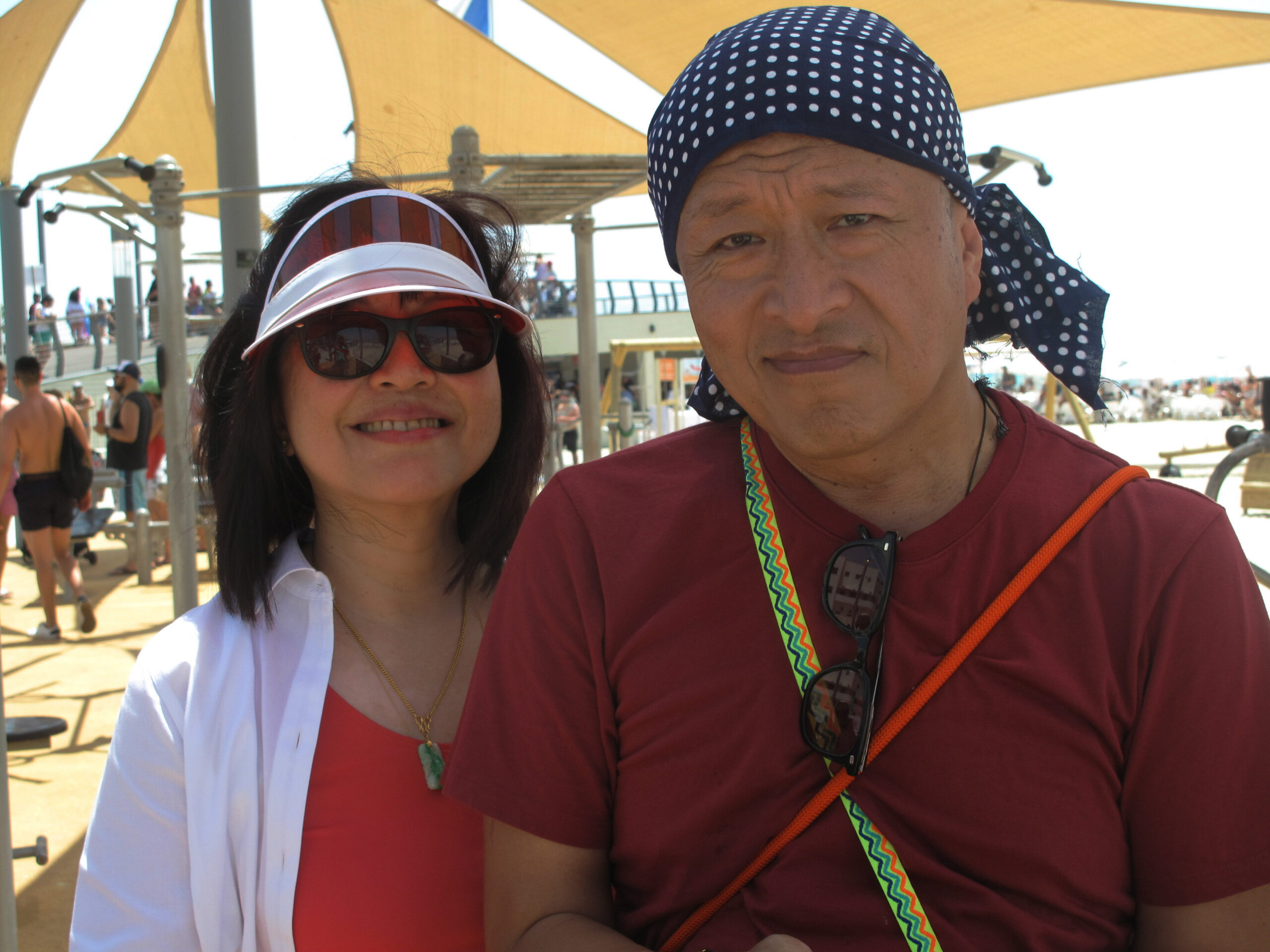
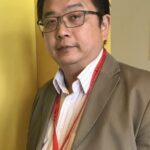
Chairman of the Board Dzongsar Khyentse Rinpoche, Board members Kris Yao and
Amelia Chow, and KF Advisor Steven Goodman at the August 3rd meeting. |
Board Meeting Slide Show
|
In his opening remarks, Rinpoche reminded the board members of the scope of the Foundation's work, which
benefits "not only one or two monasteries or
lineages or selective projects." He spoke about the current buzz of
interest in Buddhism and quoted Jamyang Khyentse Chökyi Lodrö, who said
that "when dharma activity is glowing, then we should put every effort.
The board then heard updates on the Five Projects and a report from the
Investment Committee. First up was a discussion about ways to support
the development of Buddhist studies in academic institutions around the
world. The board agreed to focus on developing centers of
excellence with endowed chairs at their core. In addition, contacts
have already been made and fundraising has begun on a project to
develop visitorships at institutions such as Oxford and Cambridge. KF
Advisors Gene Smith and Richard Dixey gave crucial advice and direction
on these matters.
In keeping with the Foundation's goal of supporting Gene Smith's
unique and invaluable work of collecting, scanning, formatting,
digitizing, and distributing Tibetan texts, the board decided to
allocate long-term funding to the Tibetan Buddhist
Resource Center. A
full report will be available soon.
Board member and Scholarship Committee Director Florence Koh reported
that the number of scholarship applications has been increasing
steadily. Thirty-seven applications were received for the January, 2007
round, and 50 for the July round. Because we have received a number of
applications from students who wish to attend Rangjung Yeshe Institute
in Nepal, and because of the high quality of the Institute's training
program, the board decided to offer Rangjung Yeshe an institutional
grant for scholarships. The board also voted to offer support to
long-term practitioners in Tibet, some of whom are in
lifelong retreat and currently have to beg for their food.
Board Member Amelia Chow gave a report about her work with Dzongsar
Khyentse Chökyi Lodrö Institute in India, where the administration team
is implementing simple and efficient new accounting and management
procedures, and where the quality of the monks' food has been
significantly improved because of the Foundation's support. The DKCLI
medical clinic is kept busy providing medical care to the Institute's
monks and teaching them about relevant health and hygiene issues.
The board discussed and accepted the annual and five-year budgets
proposed by Executive Director Cangioli Che on behalf of the Budget
Committee; approved a series of policy guidelines on funding,
organization structure, fundraising, and publications; and supported
the motion to appoint Ang Chui Jin to the board of directors and Ding
Nai-Chu to be an advisor to the board.
Following the five-hour meeting, Rinpoche joined the participants for a
celebratory dinner in a restaurant that rotates high above the city of
Vancouver.
|
Patron King Series Part VIII:
Prince
Shotoku
In the middle of the sixth century in Japan, the Imperial Court was,
according to Peter Matthiesson in Nine-Headed Dragon River, made up of
nothing
more than "rude assemblies" of people, without a government or written
language, who had arrived from the nearby mainland coasts and
lived "in
shifting settlements along the rivers." Various clans battled for
power, and it was not uncommon for one clan member to murder another in
the
struggle to rise to power. Prince Shotoku was born into this roiling
culture in 574 CE. His father and mother were the emperor and empress
of the
ruling Soga clan, which was struggling to keep hold of the throne.
Buddhism had come to Japan from the Korean kingdom of Paekche 52 years
earlier, but it had not been embraced in any significant way. However,
the
prince's great-uncle--despite being a bit of a barbarian himself--was a
student of Mahayana Buddhism, and it was because of his influence that
Prince
Shotoku, as a young boy, began memorizing Buddhist texts. (The
mythology of the prince's childhood includes the fact that he could
talk by the time
he
was four months old and could read and write by his first birthday.)
When his father, Emperor Yomei, was gravely ill, Prince Shotoku did not
leave his bedside for many days, praying for his recovery. The emperor
died,
but not before declaring himself a Buddhist. The prince's great-uncle
had one of his own nephews killed to keep him from ascending to the
throne;
according to some scholars, he wanted to ensure that the prince, not
old enough at the time, would someday rise to power and make Buddhism
the state
religion. In the meantime, the prince's great-aunt was installed as
empress, and within two years she made the prince her regent and crown
prince.
Because the Soga clan was still battling to stay in power, the prince
prayed to the Four Buddhist Guardian Kings (the Shitenno), promising to
honor
them with an official imperial temple in exchange for their help in
ending the strife in the region. As if in response, the head of the
prince's
rival clan was killed in battle, and the Soga clan was finally able to
secure its seat.
Keeping his word to the Guardian Kings, Shotoku began construction of
Shitenno-ji (Temple of the Shitenno) in 593. When that temple was
finished, he
began construction of a second, in Nara, where he was born, which he
called Horyu-ji. He built a third temple near Osaka so that all those
traveling
in and out of Japan would pass through it, and a fourth temple,
Tenno-ji, which contained a college, a monastery, a hospital, and an
asylum. Tenno-ji
became a model for future such complexes. Many scholars believe that
Prince Shotoku built 45 temples in the Nara-Osaka region, most of which
were
schools as well as religious centers. During this time of temple
building, Prince Shotoku began studying Buddhism under the guidance of
two Korean
monks.
Ten years after the prince took power, he issued his Seventeen Article
Constitution, which was not so much a legal document as a moral
treatise,
based on Confucianism and Buddhism, which many regard as the foundation
of Japanese culture today. The constitution set down the
guidelines for
a centralized state like China's, headed by a single ruler who would
rise because of merit, not birth, and it also laid out rules for right
conduct.
For instance, Article Two of the constitution states, "The three
treasures, which are Buddha, the (Buddhist) Law and the (Buddhist)
Priesthood,
should be given sincere reverence, for they are the final refuge of all
living things." And Article Ten cautions, "Let us control ourselves and
not
be resentful when others disagree with us, for all men have hearts and
each heart has its own leanings... For we are all wise sometimes and
foolish
at others. Therefore, though others give way to anger, let us on the
contrary dread our own faults, ..."
With the constitution in place, the prince set out to enrich his
country further by inviting scholars from China and Korea to come to
Japan to teach
his people astronomy, geography, medicine, and other sciences.
Meanwhile, the prince became a scholar himself, writing commentaries
and lecturing on
the Lotus Sutra, the Lion's Roar of Queen Srimala Sutra, and the
Vimalakirti Nirdesha Sutra. He also compiled a complete history of
Japan, and
developed social programs and public works like moats and roads for the
benefit of his people. Having ushered in what historians refer to as a
Golden
Age in Japan, Prince Shotoku died at the age of 49 in 622
C.E.
To learn more about Prince Shotoku and the Golden Age in Japan, read
River of Fire, River of Water: An Introduction to the Pure Land
Tradition of
Shin Buddhism, by Taitetsu Unno (Doubleday, 1998).
|
Printable Version |
|