Support for monastics at Dzongsar Khyentse Rinpoche’s institutes in China, India, and Bhutan was the catalyst for Khyentse Foundation’s establishment. In June 2001, Rinpoche made a pilgrimage to Dzongsar Monastery, his traditional seat in the small town of Derge in western China, accompanied by a few of his students. Awed by the monastery’s size and Rinpoche’s responsibility, as its spiritual director, for the needs of so many monastics, the students sought to relieve him of the onus so that he could turn his attention elsewhere. KF was then established later that year as a system of patronage and an Endowment for Monastic Education set up.
Over the years, the initiative has expanded from providing food and other necessities for the monastics in the various Khyentse institutes to helping them improve their accounting and management systems and introducing foreign language learning and computer training. In 2010, Rinpoche asked Khyentse Foundation to design a leadership and management program to “bring the monks into the 21st century” and initiated a program to sponsor khenpos to be visiting scholars at Western universities. Additionally, efforts were made to provide language training opportunities and living experiences overseas for khenpos and other monastics under the English for Buddhist Scholars Program, with the goal that graduates could go on to teach the dharma to students in the West.
Support for monastics at Dzongsar Khyentse Rinpoche’s institutes in China, India, and Bhutan was the catalyst for Khyentse Foundation’s establishment. In June 2001, Rinpoche made a pilgrimage to Dzongsar Monastery, his traditional seat in the small town of Derge in western China, accompanied by a few of his students. Awed by the monastery’s size and Rinpoche’s responsibility, as its spiritual director, for the needs of so many monastics, the students sought to relieve him of the onus so that he could turn his attention elsewhere. KF was then established later that year as a system of patronage and an Endowment for Monastic Education set up.
Over the years, the initiative has expanded from providing food and other necessities for the monastics in the various Khyentse institutes to helping them improve their accounting and management systems and introducing foreign language learning and computer training. In 2010, Rinpoche asked Khyentse Foundation to design a leadership and management program to “bring the monks into the 21st century” and initiated a program to sponsor khenpos to be visiting scholars at Western universities. Additionally, efforts were made to provide language training opportunities and living experiences overseas for khenpos and other monastics under the English for Buddhist Scholars Program, with the goal that graduates could go on to teach the dharma to students in the West.
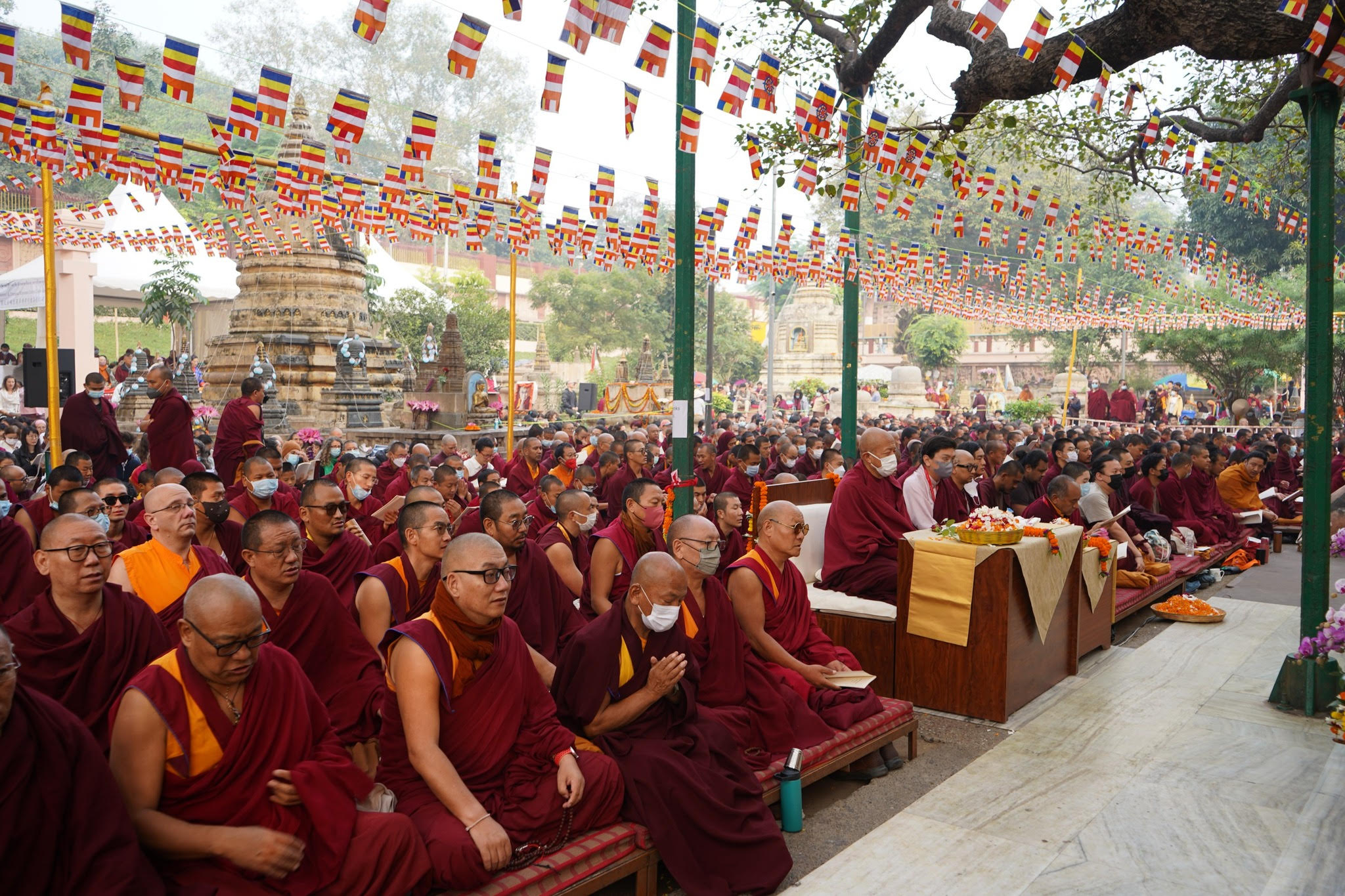
Senior khenpos with Dzongsar Khyentse Rinpoche and other rinpoches at the Dzongsar Mönlam in Bodhgaya, India, with Khenpo Choying Dorjee, first row, second left, and Khenpo Norbu Tsering, second row, first right, November 2025.
A Talk with Two Khenpos from Dzongsar Institute
During the recent Dzongsar Mönlam in Bodhgaya, Khyentse Foundation caught up with Khenpo Choying Dorjee and Khenpo Norbu Tsering from Dzongsar Institute (now officially called Dzongsar Khyentse Chökyi Lodrö Institute [DKCLI]*) in Chauntra, India, to talk about monastic training in the fast-changing 21st century.
How has the situation at Dzongsar Institute in India changed over the years?
Khenpo Choying Dorjee The admission of the students, the teachers, and the way the teachings are imparted have all gone through great changes. However, I don’t feel the fundamental vision has changed. From the establishment of Dzongsar Institute in Derge by Jamyang Khyentse Chökyi Lodrö, the vision has been to produce qualified teachers who could uphold the Buddha’s teachings. At the age of 26, Khyentse Chökyi Lodrö built 25 rooms for 50 students and invited Khenpo Shenga from Dzogchen Monastery to come and teach, sponsoring the students’ meals and other necessities himself. The curriculum was designed so that a good number of the students would be able to uphold the lineage, who were both accomplished and learned and who had seen the truth. Nowadays, Buddhism has spread to many corners of the world, so the curriculum has been redesigned so that graduates are also equipped to disseminate the teachings to the modern world, such as through the introduction of different languages like Chinese and English. And laypeople, including women, can now study in the institute as well as monastics.
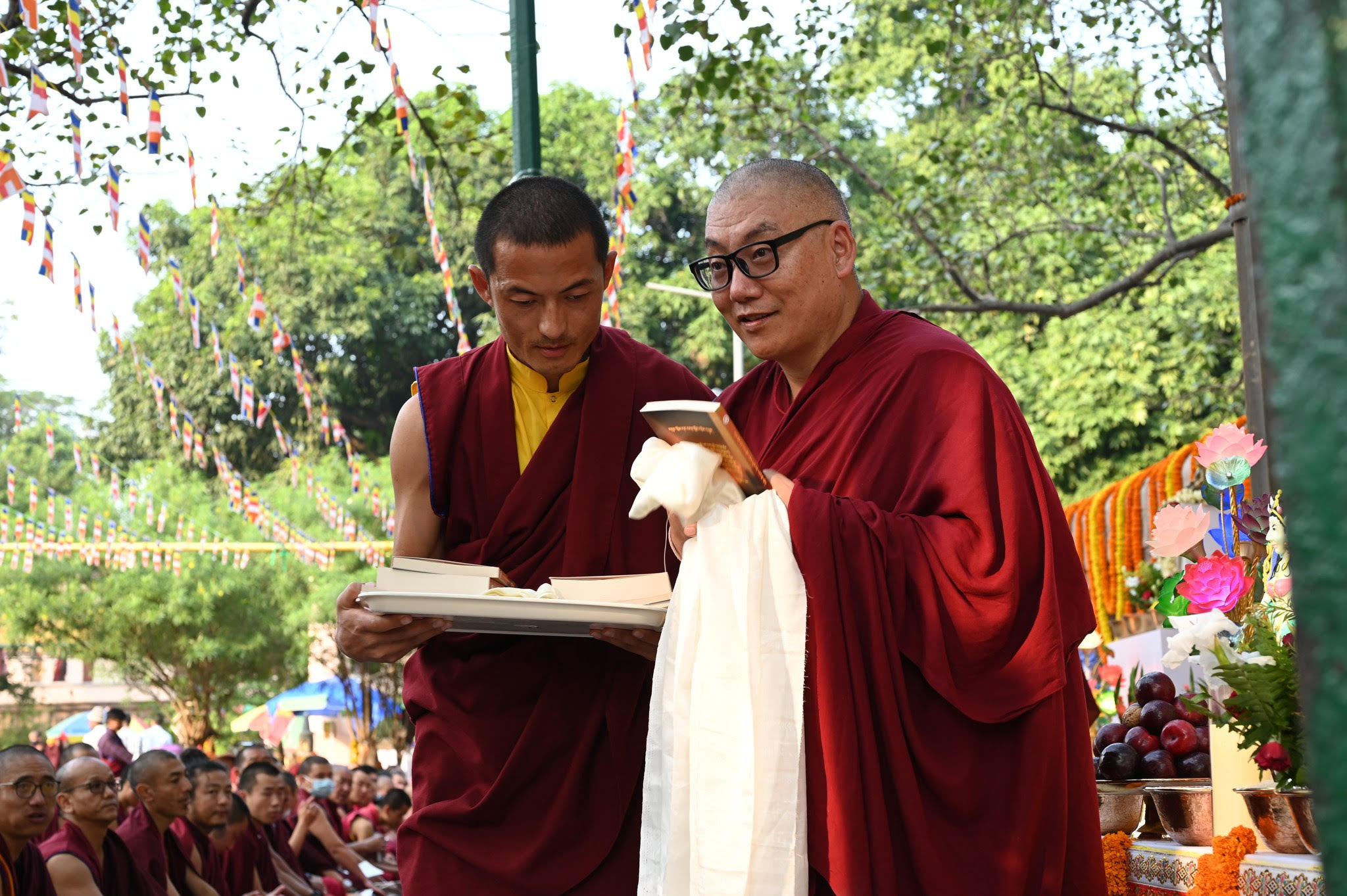
Khenpo Choying Dorjee (right) with Karma Tsering at the book launch ceremony during the Dzongsar Mönlam in Bodhgaya, India, November 2025.
When you joined Dzongsar Institute, did you have any idea what lay ahead? How do you feel about the changes?
KCD When I was studying at the institute I never imagined that such a transformation would take place, that the shedra (monastic college) would become a place where both lay and ordained, and both male and female, students would study. I feel that the changes at the institute are due to the changes in the world, such as technological advancements. And these changes at the institute are necessary, because we need to move with the times. But I feel it’s too early to say whether they are in fact good or bad.
The main thing is, the root vision has not changed. Dzongsar Institute was never built for people to just find a way to make a living. This has never been the institute’s vision, and I am confident that its root vision will never change. And it shouldn’t change. Rinpoche always says that the vision of the institute is accomplished even if it can produce just one person who is qualified and who can really uphold the teaching lineage of the Buddha.
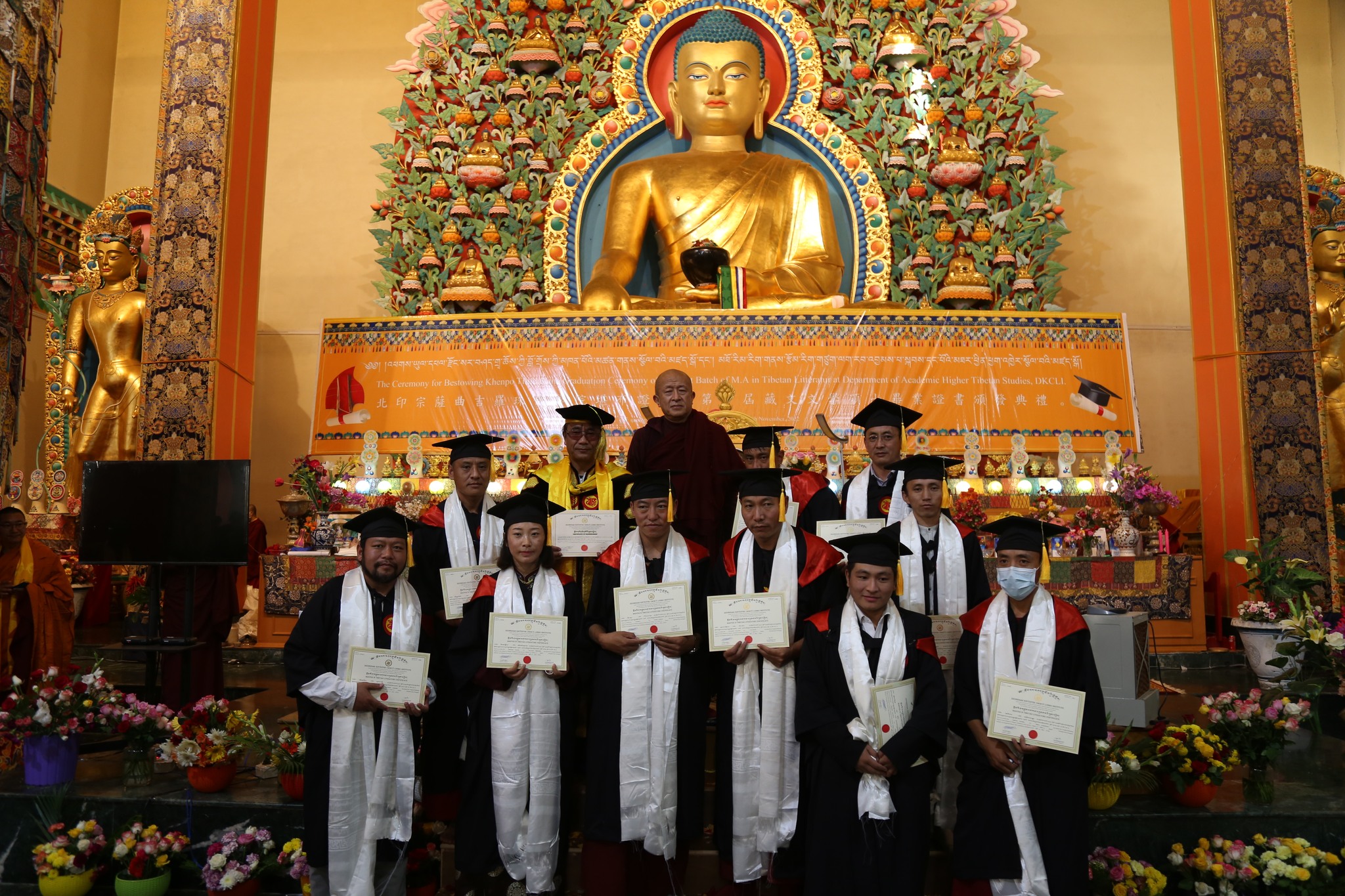
The first eleven MA graduates in Tibetan literature, including both monastics and lay students, receiving their certificate from Dzongsar Khyentse Rinpoche during the Drubthab Kuntu program at Dzongsar Khyentse Chökyi Lodrö Institute, Chauntra, Himachal Pradesh, India, November 2022.
“The Endowment for Monastic Education guarantees that the monastic tradition at the Dzongsar institutes will continue and that all the basic needs of at least 700 students will be covered for as long as the endowment exists. I cannot guarantee that all the graduates of the institutes will become egoless, selfless individuals, or that they will conquer all their negative emotions, but I am very sure that at least one of them will become a selfless being. Do not underestimate the value of one such individual. One person can influence millions of beings. … The purpose of Khyentse Foundation supporting monastic institutions is to produce such individuals—scholars and teachers who positively influence the world.”
— Dzongsar Khyentse Rinpoche, at the inauguration of Dzongsar Khyentse Chökyi Lodrö Institute in Chauntra, Himachal Pradesh, India, 2004
The pilot leadership and management program was held at Dzongsar Institute and followed by a number of workshops held in India and Nepal. As one of the participants in the program, did you find it useful?
KCD Although the training seems to have been designed for big companies and big business houses on how to expand their business and how to make a profit, I found the courses on how to identify and break down challenges and how to solve problems really helpful. While the training in self-awareness is not very new to Buddhists, how to put this into action in day-to-day life is really beneficial for us.
The participants from the shedra had not been educated in the modern education system, so it was difficult to understand all the skills being taught, the nuances and so on. I feel that if we could offer a course on how to manage and how to develop leadership skills in a Buddhist way— “Buddhist monastic management”—especially at Dzongsar Institute, it would be really helpful. It would teach the people working there what their role is, what their responsibility is. It would make clear what the goal of the shedra really is.
Leadership management teaches how to identify problems and goals. This is one of the biggest problems nowadays. Many monasteries lose sight of the main purpose of the management. Just having a vision is not enough. You need to create a road map that is in line with the vision and have the necessary tools to accomplish the vision. This management course could help to identify Dzongsar Institute’s vision, the most important and urgent goals that need to be accomplished. If the main vision is identified it will help in creating a curriculum and a situation that really helps students to study, and that will lead to the production of students who can benefit the dharma for a long period of time. So, in this respect I feel that the management course should be according to the changing times and should help people to be not just idealistic but also practical and realistic, and to be able to work according to the situation.
Khenpo Norbu Tsering, Dzongsar Institute’s current principal, also shared his thoughts on modernization and the changes in the shedra today.
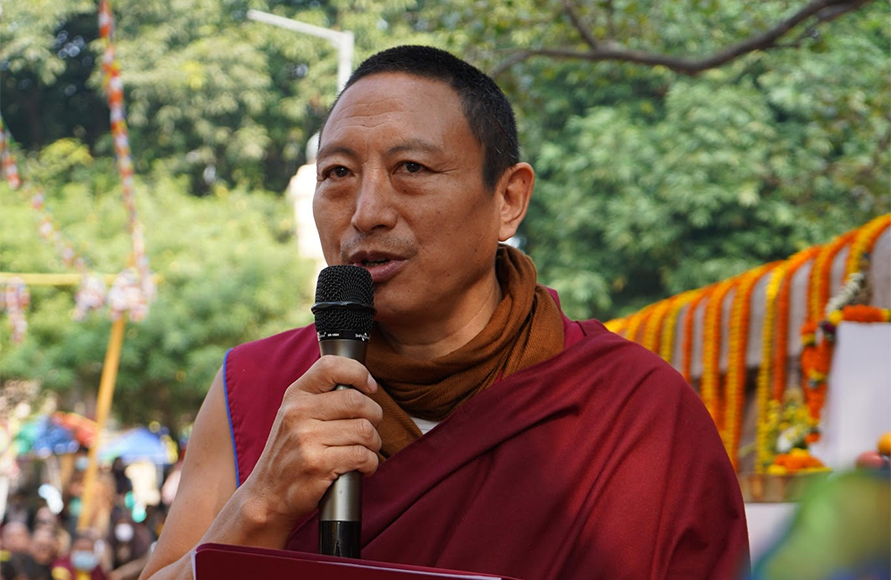
Khenpo Norbu Tsering at the Dzongsar Mönlam in Bodhgaya, India, November 2025.
Now that laypeople and female students are admitted to Dzongsar Institute, how is it going?
Khenpo Norbu Tsering We are at the very beginning of this new system, and at the moment there are quite a few laypeople studying at the institute and the interest is not bad. We are trying our best to work on making the program accessible to and feasible for laypeople, and I am confident that the interest will grow in the near future. From what I witness at the moment, the trend seems to be very positive.
One question I’ve been asked is whether there is any special or different curriculum for female students wanting to study at the institute. From my point of view, there’s no such thing as a curriculum for males or females—we are designing the curriculum so that it can be studied by both male and female students. We are very much trying to introduce that whole education system in the institute.
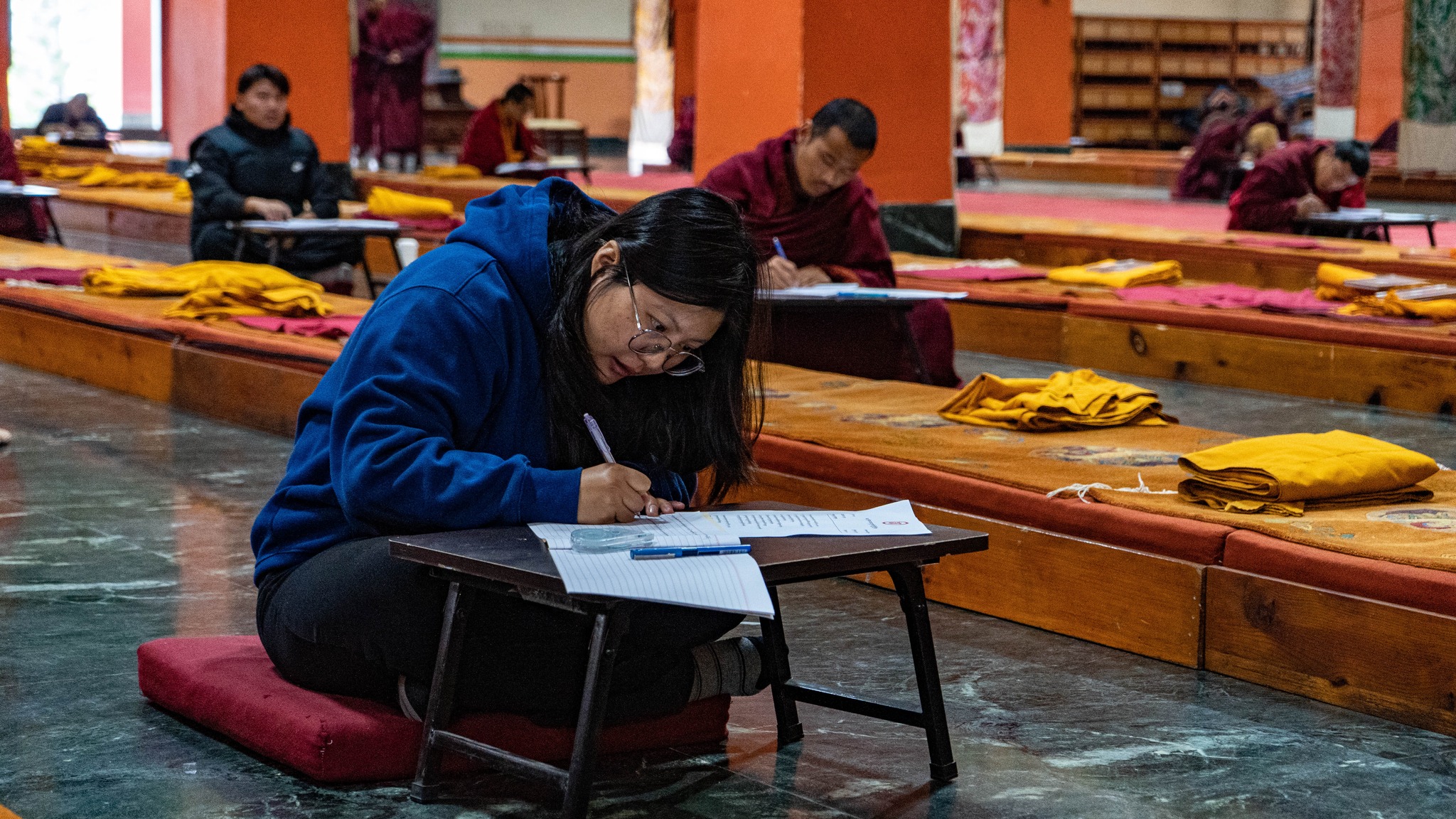
Female lay student taking the final examination of the Buddhist Philosophy and Tibetan Studies Department at Dzongsar Khyentse Chökyi Lodrö Institute alongside monastics, December 2025.
Have there been any challenges in introducing the new system?
KNT Until now, Dzongsar Institute has been a traditional environment for people with a traditional mindset. The transformation is very new, and as we are trying to take steps towards transforming the educational system, there have been quite a number of challenges from many different perspectives since the way of thinking is traditional. It seems that it will take time to change that mindset. However, we are trying our best to navigate these challenges.
It is the intention of both Dzongsar Khyentse Rinpoche and the institute administration to bring about these changes since the world is changing. We can’t help but change the system in this modern world when everything is going at a very fast pace. The main aspect we are trying to transform is our habits—our habits of thinking, acting, and studying. Among the many habits we are trying to change, the main one is the way we educate people, how we learn Buddhism in the monastic setting. Until now, the area of knowledge or study has been very narrow. Now, we are trying to introduce the system of studying the different philosophies and the different traditions of the different Buddhist schools or traditions, be it Mahayana, Vajrayana, or Shravakayana. This is just an example.
Changing our habits is very much related to changing the environment. So, at the moment, we are trying to expand the environment and also to improve the facilities and infrastructure to introduce a holistic Buddhist education at the institute. We are also putting a lot of effort into changing the syllabus and the curriculum and the subjects studied, trying our best to combine traditional and modern methods of imparting education. However, some of the traditional ways need to be sustained or preserved, such as the teacher-student relationship.
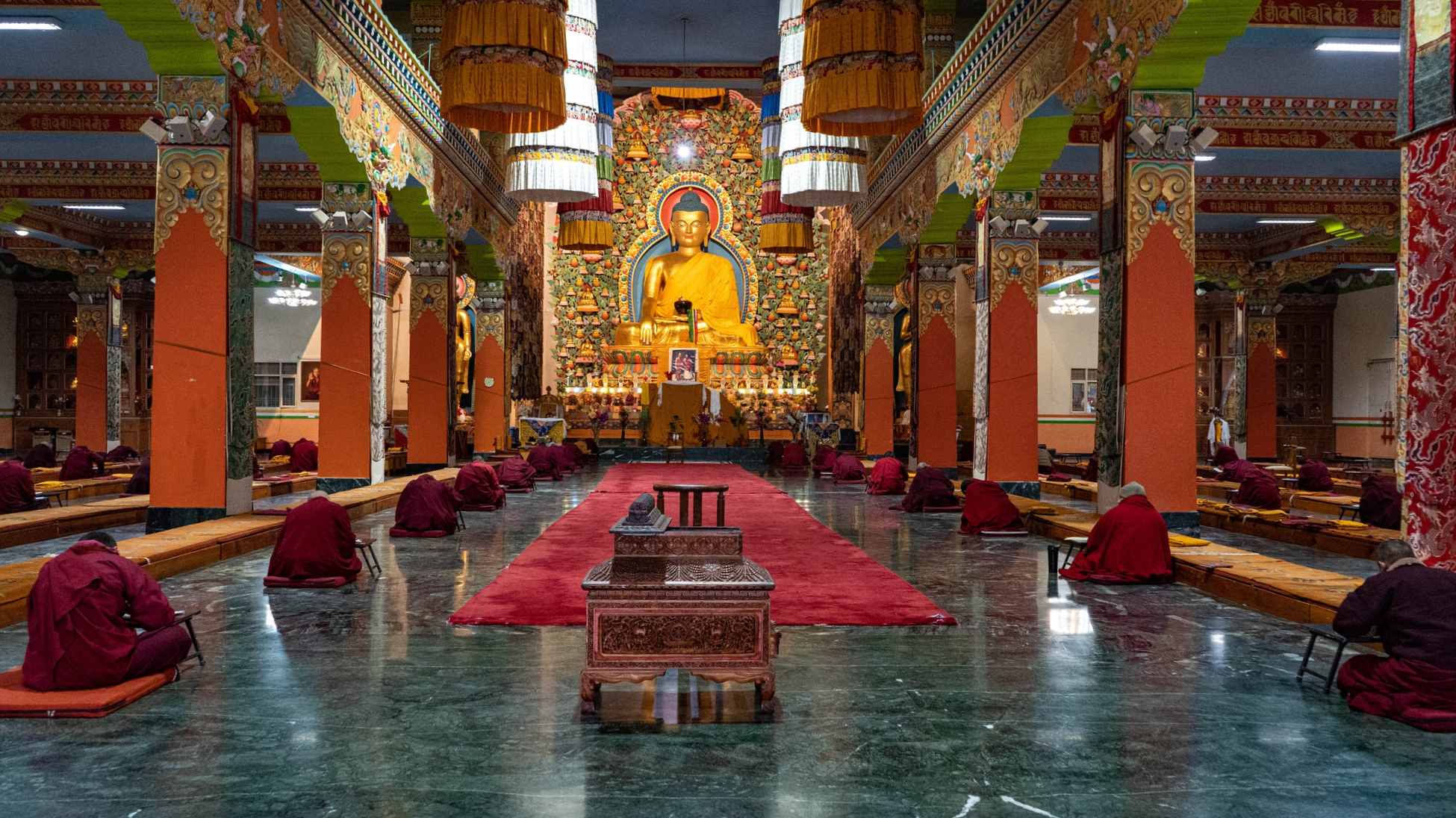
Final examination of the Buddhist Philosophy and Tibetan Studies Department at Dzongsar Khyentse Chökyi Lodrö Institute, December 2025.
*Dzongsar Institute in India was located in Bir, Himachal Pradesh, from 1985 to 2004, when it moved to nearby Chauntra and was officially renamed Dzongsar Khyentse Chökyi Lodrö Institute (DKCLI), although the name Dzongsar Institute is still in common usage. Other than DKCLI, KF continues to support Chökyi Gyatso Institute in Bhutan and a number of monasteries of different lineages in the Himalayan region.
Khenpo Choying Dorjee joined Dzongsar Institute in Bir in 1992 and received his khenpo degree (equivalent to a PhD) in 2004. From 2006 to 2007 he studied English at the British Council in Singapore, and in 2011 Rinpoche sent him to UC Berkeley as a visiting scholar, sponsored by KF. Khenpo taught at Dzongsar shedra from 1998 to 2018, with brief intervals for his studies and research abroad. He served as assistant principal of the shedra from 2008 to 2012 and as head principal for the 2013–16 term. As well as teaching the dharma both in the West and in Chinese communities and to Western dharma teachers-in-training on the Milinda Program, Khenpo previously served on KF’s India Programs Working Committee. He is currently an advisor to the Executive Committee of 84000: Translating the Words of the Buddha, a project consultant to Khyentse Vision Project, and an advisor to the Kumarajiva Project.
Khenpo Norbu Tsering was ordained as a monk in 1988 and joined Dzongsar Institute in 1993. After completing his studies, in 2003 he was appointed a philosophy teacher at the institute and elected to the board. He received his khenpo degree in 2004. Khenpo has taught Buddhist philosophy and conducted rituals in Taiwan, where he also studied Chinese language. In 2024, he was appointed principal of DKCLI and given responsibility for all academic, financial, and legal matters, assuming the role of head administrator.
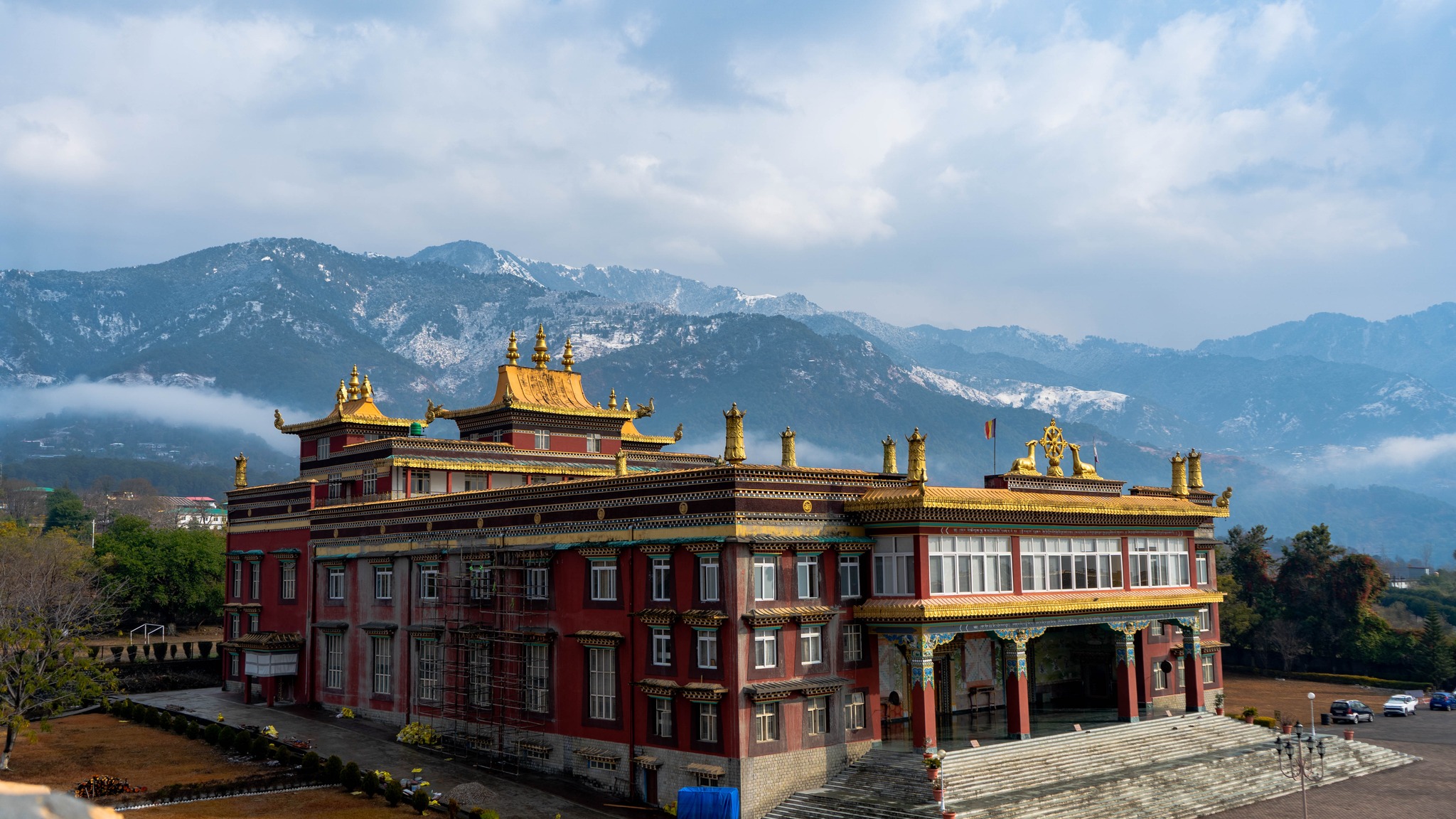
Featured image above: Dzongsar Khyentse Chökyi Lodrö Institute, Chauntra, Himachal Pradesh, India.
All photos courtesy Dzongsar Khyentse Chökyi Lodrö Institute.
Eager to know more about this amazing teacher and hear his recommendations as an important player in Khyentse Foundation’s future, we sat down with Drubgyud Tenzin Rinpoche at SSRC and spoke with him about his training as a Buddhist teacher and his new life in the West.
Drubgyud Tenzin Rinpoche, one of the brightest young tulkus under the direct tutelage of Dzongsar Khyentse Rinpoche (Khyentse Rinpoche), is now a celebrated scholar and Buddhist teacher.
Support for monastic institutions was the original impetus for the formation of Khyentse Foundation, and it remains the core of KF’s mission to preserve Buddhist heritage and promote the Buddha’s wisdom.
In 2005, Venerable embarked on another important mission: to seek common ground with other Buddhist traditions and collaborate with them to uplift the training and education of monks from various countries in Asia.
Khenpo Kunga Wangchuk devoted his life to making sure that the legacy of Dzongsar Institute continues. Khenpo passed away in Bir, India, on May 26, 2008.
On the occasion of its 25th Anniversary, Dzongsar Khyentse Chökyi Lodrö Institute is hosting HH Sakya Trizin, the head of the Sakya School, for a historic transmission of the precious teachings of Lamdre Lobshey.